




Introduction to How Search Engines Work
Understanding how Search Engines Work is essential for anyone involved in digital marketing, blogging, or website management. When a person enters a search, hidden systems swing into motion, scanning vast numbers of online pages using smart rules that weigh usefulness, trust signals, and how people interact with sites. Pages get found by automated bots that follow links, then are stored in giant databases ready for quick access when needed. What shows up first often depends on how well a page matches what someone is really looking for – not just exact words but meaning behind them. Newcomers might think it’s random, yet patterns emerge once you see how data gets sorted step by step. Seeing past the surface reveals choices made long before results appear – choices about speed, clarity, source strength. Content shaped without regard for these layers tends to fade while thoughtful adjustments help material rise quietly. Behind every result list lies an invisible framework deciding worth based on silent calculations happening in seconds. Awareness of this flow – from discovery to display – guides better decisions without chasing shortcuts or trends.
What Are Search Engines and Why Do They Matter
One way people track down details online is through digital helpers called search engines. These systems sift through countless sites, picking out matches tied closely to what someone needs. A person typing in vacation advice or methods to improve site rankings gets answers shaped by word patterns, past choices, and how solid the material looks. Companies and writers lean into these platforms since visitors arriving without ads tend to stick around longer. Knowing what makes a webpage stand out in those scans helps shape posts that connect more easily with readers who matter.
How Search Engines Find Content
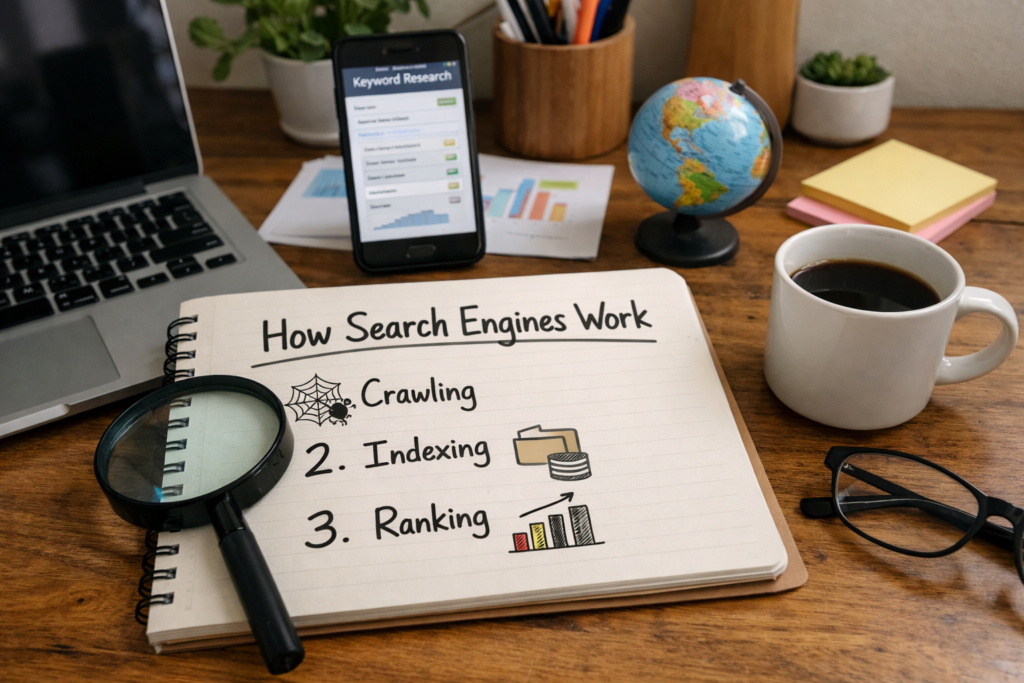
Starting, crawling means bots move across the web looking for fresh or changed pages. From there, they jump between connected pages, checking words, pictures, and behind-the-scenes code. When a site has clear paths and current maps of its layout, those bots get around faster. If things are messy inside or some doors lead nowhere, certain spots might be missed or visited rarely. Say you post a new article – once links point to it or a map shows its location, scanners notice and line it up for next steps before anything else happens.
Step 2: Indexing – Organising and Storing Web Content
After crawling, search engines move to indexing, where they analyse the content and store it in massive databases. During indexing, algorithms evaluate topics, keywords, structure, and multimedia elements to understand what a page is about. Content that is clear, informative, and well-structured is more likely to be indexed correctly. For instance, a detailed guide on Types of SEO with proper headings and contextual keywords helps algorithms categorise the page accurately. Pages with duplicate or low-quality content may be ignored or only partially indexed, which reduces their chances of appearing in search results.
Step 3: Ranking – Deciding Which Pages Appear First
One page might show up before another because it answers a question more clearly. Search systems look at many things – how fast a site loads, how people interact with it, whether other sites link to it, and if the information feels current. When topics match closely between two pages, details matter most. A well-organised piece with trustworthy sources often wins out. Position depends on subtle edges, not just keywords or volume. Search engines also analyze Keyword Intent in SEO, ensuring the content matches what users are actually searching for. This is why understanding search intent and delivering helpful answers is critical for improving visibility and maintaining strong rankings.
Understanding Keyword Research and User Intent
Keyword research helps identify the terms people use when searching online. Using Free Keyword Research Tools allows content creators to analyse search volume, competition, and user intent. Still, good SEO goes beyond dropping in keywords. It means getting what people really want when they search. For questions seeking knowledge, answers need depth. When someone looks to buy or act, responses should offer clear options. Matching web pages to these goals makes them more useful. Words fit best when they flow inside helpful text. Search systems notice topics more easily this way. Stuffing terms too much backfires. Relevance grows when meaning leads, not tricks.
AI and search optimisation today
These days, search tools lean heavily on smart systems that learn from data. Because of how they study what people do online, these programs grasp ideas behind words, not just phrases copied exactly. Thanks to such changes, crafting content around meaning matters more than ever before. Writers shape their work to cover full topics, guided by how real folks ask things out loud. Understanding natural speech lets machines serve up better fits when someone searches. Quality stays central – content built for readers wins every time.
Simple Ways to Make Your Site Clearer for Search Engines
Start strong with clear headlines. Then come shorter blocks of text so eyes move easily across the screen. Good flow keeps people reading longer. Often overlooked, quick loading matters just as much as well-chosen words. Phones need it too – sites must work smoothly on smaller screens. When answers match what users actually ask, trust builds without effort. Writing plainly about useful topics sticks better than complex jargon ever could. Now and then, changing old posts tells search engines they’re still alive. Tossing in solid outside links when it makes sense shows you know your stuff and builds credibility along the way.
Conclusion: Why Understanding Search Engines Matters for SEO Success
Figuring out how search engines work sets the stage for smarter content plans. Not just crawling, but also sorting pages, shapes, and where sites show up when someone searches. Good writing matters – so does layout, along with knowing what users actually want. Visibility climbs when material is useful, well-organised, plus aligned with real queries. Over time, that approach pulls in visitors without paid pushes. Search behaviour shifts, yet clarity and relevance stay key. Algorithms evolve, though people still look for answers fast. Building trust through consistency often leads to longer visits. Rankings respond to precision more than volume these days. What stands out tends to answer fully, not just repeat keywords. Understanding Technical SEO alongside content optimisation ensures that websites are not only informative but also technically sound, allowing search engines to interpret and rank pages more efficiently over time.