



Introduction to Keyword Intent in SEO
Understanding Keyword Intent in SEO is one of the most important skills for anyone who wants to rank higher on search engines and attract the right audience. It’s common for new marketers to chase popular search terms. Yet seasoned pros look deeper – past popularity – to uncover why people actually type those words into a search box. That underlying purpose? It shapes everything. Matching your page to that motive isn’t just helpful – it shifts results. Pages aligned with searcher goals tend to climb rankings more easily. They also turn casual clicks into meaningful actions. Growth often follows when content answers real questions, not just phrases.
These days, search tools think more like people. Instead of just counting words on a page, they check whether the material actually answers what someone is looking for. Because of that shift, knowing why a person searches a certain term matters most when planning online visibility today.
What is Keyword Intent?
Most times, when people type things online, there’s a reason driving that. That aim – what some call keyword intent – is what guides their search. Behind every query sits a need, clear or vague. Often it’s about learning something new instead of just browsing. Sometimes they’re weighing choices between products without saying so outright. Other moments point toward visiting one exact site they already know. Buying stuff shows up too, quietly shaping how terms get entered.
A person typing “how to start a blog” probably wants steps or advice. Yet when another looks up “buy running shoes online,” that one aims to spend money straight away. While each uses words people type often, what they actually want differs sharply.
A shift in perspective makes it easier to shape material that hits the mark. Rather than assuming intent, responses line up with actual queries. Clarity comes from focusing on real questions people ask.
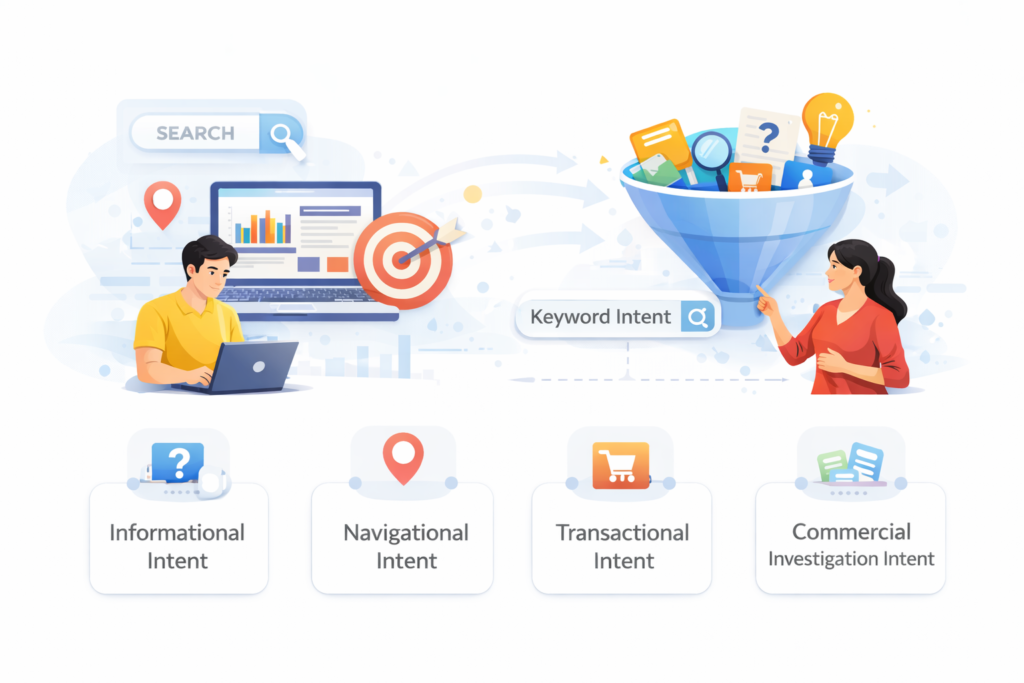
The Four Main Types of Keyword Intent
Informational Intent
Informational intent occurs when users are searching for knowledge or answers. These searches often include words like “what,” “how,” “why,” or “guide.” For example, “what is SEO” or “how does crawling work in search engines” are informational queries.
Content that satisfies informational intent usually includes blog posts, detailed guides, tutorials, or educational articles. This type of content builds trust and authority over time.
Navigational Intent
Navigational intent happens when users want to find a specific website or page. For instance, searching for a particular company’s homepage or a login page shows navigational intent. These users already know where they want to go; they just need help reaching it quickly.
Optimising for navigational keywords ensures your brand appears prominently when users search directly for it.
Transactional Intent
Transactional intent indicates that users are ready to take action, such as buying a product, signing up for a service, or booking an appointment. Keywords like “buy,” “discount,” or “pricing” often signal transactional intent.
Pages targeting transactional keywords should be optimised for conversions, with clear calls to action and strong value propositions.
Commercial Investigation Intent
Commercial investigation sits between informational and transactional intent. Users are comparing products or services before making a decision. Queries like “best laptop for students” or “top digital marketing tools” fall under this category.
In such cases, comparison articles, reviews, and detailed breakdowns perform well because they help users evaluate their options.
Why Keyword Intent Matters in SEO
What people look for shapes how well a page ranks, holds attention, or leads to results. When the message misses what visitors want, they exit without staying long. Search tools notice if a few stick around or pages get little interaction. That kind of behaviour hints that the content might not help them much.
For example, a person looks up “SEO services pricing,” then clicks on an article that just describes what SEO means. The piece might be well written, yet it misses the mark completely. Because of that mismatch, they exit quickly – no click further, no lingering around. Over weeks, search engines notice fewer visits staying on the site. That quiet signal can quietly pull down where pages show up.
When what you write fits what people are looking for, they stay longer, feel satisfied, yet move toward taking action. Pages built around a real search purpose tend to climb higher in results – unlike those banking only on popular terms tossed into thin content.
How to Identify Keyword Intent
Identifying intent requires a combination of research and analysis. First, look at the search query itself. Words like “guide,” “tips,” or “learn” usually indicate informational intent. Words like “buy,” “price,” or “near me” often suggest transactional intent.
Second, analyse the search engine results page. Observe the type of content ranking at the top. Are they blog posts, product pages, or comparison articles? This gives you a clear idea of what search engines believe satisfies that query.
Third, understand your audience. Think about their stage in the buyer journey. Beginners often search for educational content, while ready-to-buy users search for specific products or services.
The Role of Keyword Intent in Different Types of SEO
Keyword intent plays a major role across all Types of SEO. In on-page SEO, it influences how you structure headings, write meta descriptions, and organise content. In off-page SEO, it helps determine what kind of backlinks are valuable. In Technical SEO, it ensures that your pages are optimised for speed, mobile usability, and proper crawling so search engines can understand and index content correctly.
For example, if your transactional page loads slowly, users may abandon it before completing a purchase. Even strong keyword targeting cannot compensate for poor technical performance. That is why integrating intent with Technical SEO strategies is essential for success.
Practical Tips to Optimise for Keyword Intent
Grouping keywords by what they aim to do comes first. When intent shapes the pile, pages stay sharp. Mixing goals on a single page blurs the purpose. Clusters form naturally when each topic knows its job.
Start by picking a format that fits what people are looking for. When someone wants to learn, go with a deep dive guide instead of short snippets. For those weighing options, lay out clear comparisons without fluff or bias. If the goal is buying, shape the page around quick decisions using a clean structure and clear details.
Sure thing. Break things into smaller chunks. That helps folks get around faster. Headings show the way without confusion. Each section flows to the next like steps on a path. Short lines breathe better on screen. Thoughts land more clearly when spaced out right. Readability grows when structure supports it. Eyes move more quickly through clean layouts.
It might help to include links to trusted outside sites – this kind of backing often feels more reliable. When facts or statements come from recognised experts, people tend to pay closer attention.
Common Mistakes to Avoid
One common mistake is targeting high-volume keywords without analysing user intent. Traffic alone does not guarantee results. If the audience is not aligned with your goals, conversions will remain low.
Pages that try too much often trip up readers. Take a how-to for newcomers mashed together with a pitch – suddenly it’s unclear what the point really is. Confusion sneaks in when goals clash like that, leaving visitors unsure, search tools guessing.
Skipping data checks can really backfire. Watch numbers such as time on page, how often people leave fast, along with clicks per visit – these show whether readers find what they’re after.
Conclusion
In today’s competitive digital landscape, understanding Keyword Intent in SEO is not optional; it is essential. By aligning your content with user intent, you improve rankings, engagement, and conversions simultaneously. When you understand how Search Engines Work, you realise that their primary goal is to deliver the most relevant and helpful results to users. Matching keyword intent ensures that your content becomes the relevant answer. Combined with strong Technical SEO practices, effective crawling optimization, and a clear understanding of the Types of SEO, you can build a strategy that drives sustainable growth and long-term authority.