



When that part is small and complex and expected to fit into an assembly, not many people will realize how much the machining process impacts the quality of the component. A tiny variation in dimension could cause problems when it is installed, performance issues, or rejected parts that get returned for rework or recycling. This is the time you need some swiss style cnc machining to get a proper part to support those critical components. Unlike conventional turning, swiss style machining supports the work close to the cutting edge, allowing for longer, slender parts to be machined with less deflection. This allows you to provide better dimensional consistency for your product with tighter tolerances, tighter geometries, and more complex shapes. For engineers, there are a few other factors to consider, but choosing a process is only one of them.
How Swiss-Style CNC Machining Works
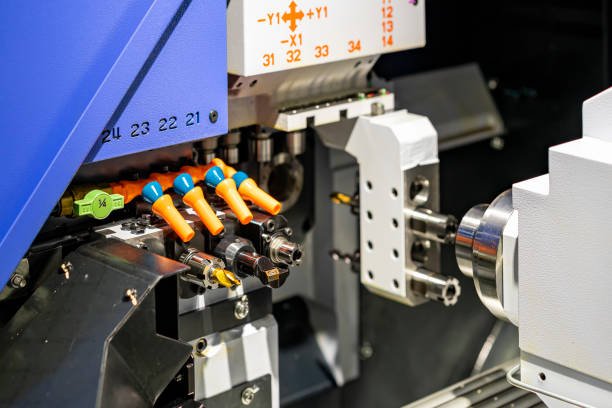
Originally designed for making watch parts, Swiss-style machining has grown to include parts such as miniature medical devices, aerospace fasteners, and industrial shafts. The primary difference is the combination of a sliding headstock and a guide bushing. Bar stock feeds through the guide bushing, which supports the material near the cutting tool, while the machine takes off chips. This is an advantage when turning long, thin parts with high length-to-diameter ratios. On a typical lathe, such a slender part might whip around due to cutting forces, making it harder to maintain tight tolerances. Swiss turning solves that problem by providing support on the machine as close as possible to the workpiece. Modern Swiss machines also add machining capability, as they can perform a combination of turning, drilling, milling, threading, and other tasks in a single setup. Multi-axis machines also allow machining of multiple features without changing the part’s position in the machine, lowering handling time and reducing the accumulation of tolerances from multiple setups.
Universal Application Across Industries
The application will be determined by part shape and what the finished item needs to do. In aerospace, the use of Swiss machining is for fine fasteners, pins, shafts, fittings, and other small parts where dimensional precision is required. The medical industry uses the process for surgical instrument components, bone screws, and other small componentry used with implant-related equipment, but subject to material choices and validation procedures. Small turned parts are also used in electronics and telecoms applications for connectors, contacts and housings. In the world of industrial equipment, miniature valves, threaded components and precision mechanical components all feature as applications. Sometimes the parts may be very straightforward on paper but not always straightforward to produce in small, high-volume batches with reliable quality. Material considerations are involved too. For example, stainless steel, titanium, aluminium, Inconel, and engineering plastics such as PEEK can all be suitable applications, but at what additional machining cost and process complexity? Tougher alloys will place stress on cutting tools, and plastics require heat and forces carefully managed, but regardless of a material’s name, the choice of process will depend on the full requirements of the complete job.
Understanding Tolerances and Dimensional Accuracy
One of the biggest reasons engineers look to Swiss-style turning is close tolerances. But many make the mistake of defining the tightest possible tolerance on every dimension and presuming that makes a better part. It often just complicates manufacturing and inspection, and can add a lot of cost without enhancing functionality. Tolerances should be driven by what the part actually has to accomplish. A bearing seat, mating diameter, or threaded connection may need tight control because of how it connects to other components, but a non-critical external feature may not. In principle, Swiss-style CNC can produce very tight tolerances, but there is no single optimal tolerance for every part; results will depend on the material, feature size, machining equipment, tooling and workholding, cutting conditions, inspection methods, and so on. Temperature considerations should also be taken into account, particularly for very tiny parts. It’s a good idea to keep in mind that dimensional tolerances, geometric tolerances, surface finish requirements, and thread specifications are not one and the same thing. For example, in a running shaft, you’re not just concerned with the diameter; concentricity requirements, runouts, and the relative positioning of features may be just as important. It can save a lot of time and expense to check these issues out with the machinist first.
Design Guidelines Prior to Sending a Part for Machining
What is good machining? A practical starting point: Good machining starts with a sensible design. In order to make your part properly, without complication, the manufacturer needs enough information to make the part without complication. Begin with the simple geometry. While long, narrow sections, tapered lengths or diameters may lend themselves well to Swiss machining in many situations, very fine features, long, deep holes, small grooves, and tight internal contours may not be so simple. Tool access and tool capacity can be challenges. Material selection has to be managed with equal care. They’re great materials for demanding parts, but they will take longer to machine and drive up tooling costs. PEEK and the other plastics are quite different from metal, so thermal expansion, clamping pressure, and dimensioning for the part’s use should all be considered. Do not load up the part with unnecessarily tight dimensions or highly detailed surface finish, as these add cost without benefit. Define the necessary finish on critical surfaces and let the rest be at an economically appropriate level. Finally, be aware of and think about how the part is going to be inspected. If one critical feature is hard to measure, address that early in the discussion, as it is much easier to fix during design than after the first batch has been built.
Production Efficiency, Quality Control, and Cost
When appropriate, Swiss-style machining can be extremely efficient, perhaps combining many machining operations in one machine. It’s possible to work on one part for long periods with very little handling, reducing the need for secondary machining. That can improve consistency and bring parts to finished form more quickly, especially small, high-volume components. However, Swiss machining isn’t always the most cost-effective approach to machining a part. Machine setup, programming, special tooling, material waste, and inspection can all add to the final cost. In the case of a large, simple part with fairly loose tolerances, conventional CNC turning might be cheaper. Quality control is another significant aspect. An experienced machine shop will examine drawings and set parameters, cross-check important dimensions, and have a regular inspection schedule. In aerospace and medical devices, compliance and traceability, material documentation, and industry-specific quality specifications may be necessary. Find out what documentation is required before production starts. Using prototypes to test the design can be beneficial if the product includes unusual features or materials. It allows both parties to catch potential problems early before a large quantity is produced. Even simple tweaks to the diagram or process can have a significant impact on the cost and quality of the parts.
Conclusion: Find a Suitable Swiss Machining Partner
Swiss-style CNC machining is an obvious choice for small, detailed parts that need to maintain tight dimensional controls. Its support for thin-walled parts, multiple machining operations, and complicated features makes it a useful process for aerospace, medical, electronics, telecom, and general industrial manufacturing. But the process is not optimal in isolation, and your design, material, tolerance, and inspection criteria all need to be taken into account. Choosing tight tolerances without a functional requirement is not precision engineering – it’s higher costs without extra value. When evaluating swiss turned components suppliers, don’t just look at the equipment list. Find out if the supplier has experience with the geometry you need, the required material, multi-axis CNC machining, and drawing checks, quality audits, and acceptance limits that will ensure consistent, high quality from lot to lot. Find out if the shop is willing to ask questions about your drawing and note potential manufacturing issues, or if it simply takes everything to the machine and makes what comes out. The right manufacturer can help you find the simplest design possible, retain the manufacturing essentials, and steer clear of issues that become apparent only after production begins.