



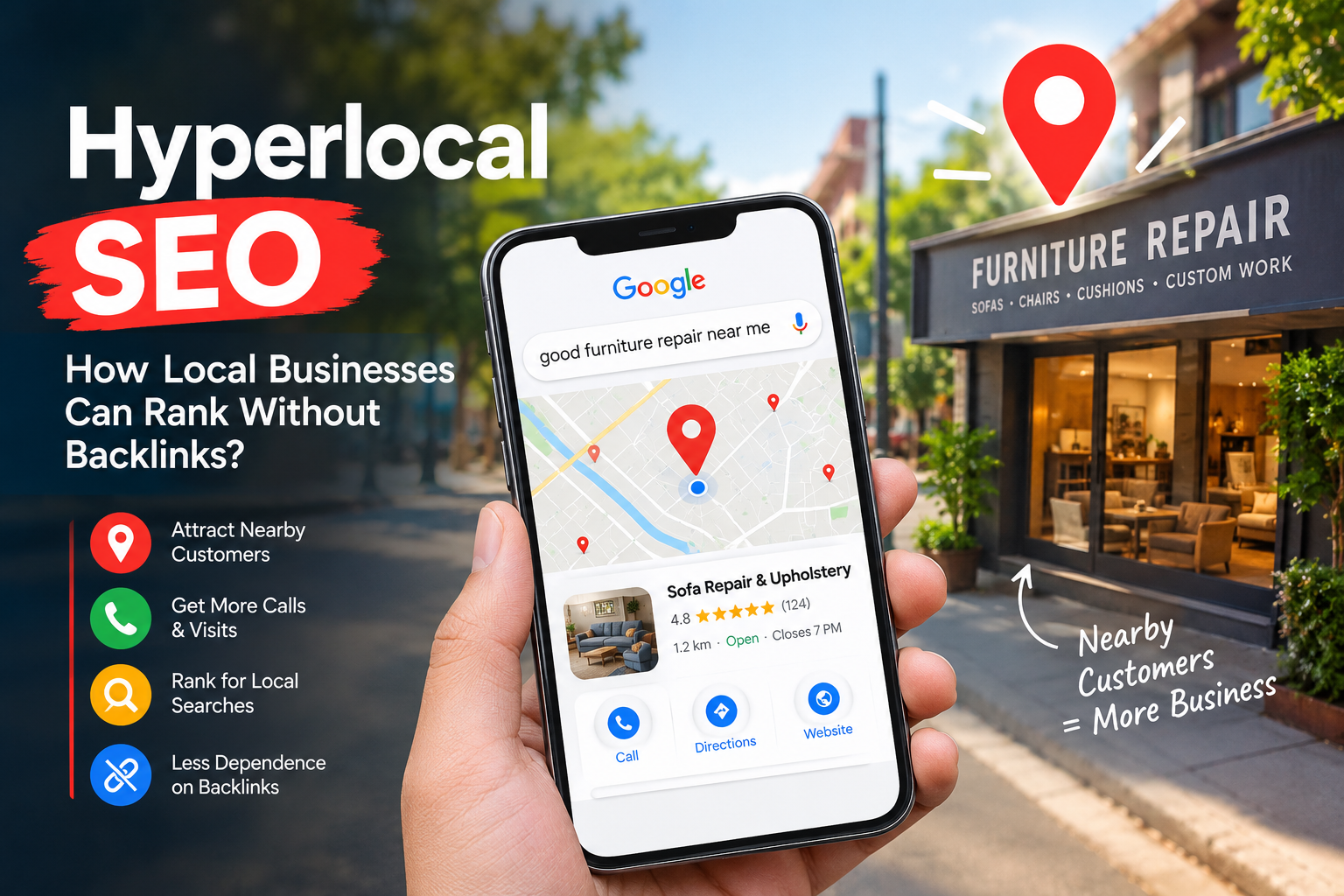
A friend of mine runs a small furniture workshop. Last year he spent months trying to rank for “wooden furniture online” and got nowhere. Then he started writing about “sofa repair near ★★★★★” and the phone began ringing. That’s hyperlocal SEO in one story. You stop competing with the whole internet and start competing with the three shops near you. Much easier fight.
What Changed in How People Search
Nobody types “restaurant” anymore. They type “good thali near me open now” while standing on the road, hungry. Phones know where they are, and Google uses that heavily.
Voice search pushes it further. People talk the way they talk, so queries come out long and full of place names. If your website only says “we serve ★★★★★,” you’re too vague to match any of it.
Start With Your Google Business Profile
Honestly, this is where most local customers meet you first. Not your website. The profile.
Pick the right main category. It sounds boring, but it decides a lot. Upload real photos, even if they’re slightly imperfect, because stock pictures feel fake and people can tell. Change your timings before Diwali, before a holiday, before anything. Nothing annoys a customer more than reaching a closed shutter that Google said was open.
Reviews are the other half. Ask for them while the customer is still smiling, maybe at the billing counter. Reply to everything. A bad review answered politely, without getting defensive, tells new visitors more about you than a pile of five stars ever will.
Content That Feels Like Your Area
Give Each Locality Its Own Page
If you serve Model Town, Civil Lines and ★★★★, don’t make one page and swap the names. Write about what’s different in each. A landmark nearby, how to reach you, what people in that area usually ask for. Even two honest paragraphs beat a copied template.
Steal Your Topics From the Counter
Your staff already knows the questions. Is there parking? Do you do home visits? Can I pay by UPI? Write those down and answer them on your site. Big national websites can’t do this, because they’ve never stood at your counter.
Can You Rank on Google in 2026 Without Backlinks?
People ask this a lot, and the answer is a bit annoying: sort of. If you want to Rank on Google in 2026 Without Backlinks for local searches, it’s possible more often than for national ones. Google looks at how close you are, how well you match the search, and how well known you are. Backlinks are only one piece of “well known.” Reviews count. Mentions count. People calling you and asking for directions counts too.
So skip the link-buying emails sitting in your inbox. Make sure your name, address and phone number are written the same way everywhere. Get into the directories your trade actually uses. Sponsor a school function or a local sports event if you can, because a mention from there is worth more than a random blog link.
Does that mean links never matter? No. In a packed market, a couple of solid local links can tip things in your favour. They just shouldn’t be step one.
Spotting Gaps Your Competitors Left Open
Most owners write blogs by guessing. That’s like cooking without tasting. A better habit is Keyword Gap Analysis, where you compare your site with nearby rivals and see which searches they win that you’ve never touched.
A basic SEMrush Advanced SEO Workflow works well here. Put in your domain and three local competitors, run the gap report, and filter for low-difficulty terms with a place name or service attached. Then split the list in two. Some topics need a brand new page. Others just need an old page rewritten properly. Look at what the search results actually show before you write, too. Someone searching “emergency electrician” wants a number to call. An essay won’t help them.
Once every three months is plenty. Local markets don’t shift overnight.
Tracking What Actually Pays the Bills
Ranking number one feels great, but it doesn’t pay rent. Calls and visits do. That’s why Google Analytics 4 matters, even for a tiny business.
Open it and check which pages bring in people from your city and nearby areas. Then see what they did next. Did they tap the call button? Press “get directions”? Fill the enquiry form? If you haven’t marked those as key events, you’re looking at traffic without any meaning attached. Put it next to your Business Profile insights and patterns show up fast. Maybe calls doubled after you added fresh photos. Good, do more of that.
Small Mistakes That Hurt More Than You’d Think
Using a virtual office as your address. Adding city names into your business name to look bigger. Leaving an old phone number on some forgotten directory. Ignoring bad reviews for weeks. Publishing twenty location pages that all say the same thing. Each one is easy to fix, but together they can quietly drag you down for months before anyone notices.
Conclusion
Local search in 2026 favours businesses that are nearby, active and honest. Clean up your profile, write for your actual neighbourhoods, learn from what competitors missed, and don’t lose sleep over backlinks. Then measure. Setting up GTM Event Tracking is the step most people put off, and it’s the one that shows which clicks, calls and form fills turn into real customers. Once you can see that, guessing stops.
Frequently Asked Questions
What does hyperlocal SEO mean?
It means optimising for people in a very small area, like one locality or a few nearby streets. The aim is to reach customers who are close enough to visit or call today.
How soon will I see results?
Profile fixes and review replies can show movement in a few weeks. New area pages and steady reviews usually take two to four months to make a clear difference.
Is a website necessary if I already have a Google Business Profile?
Yes, I’d say so. The profile helps people find you, but the website lets you explain your work, show proof and collect enquiries. It also gives you data to learn from.
Do I need paid SEO tools?
Not on day one. A profile, a spreadsheet and free reports are enough to begin. Paid tools start to make sense when you want deeper competitor comparison or manage several branches.
How often should I update things?
Look at reviews and profile details weekly, add new content monthly, and do a proper competitor check every quarter. Small, regular effort beats one big push a year.