



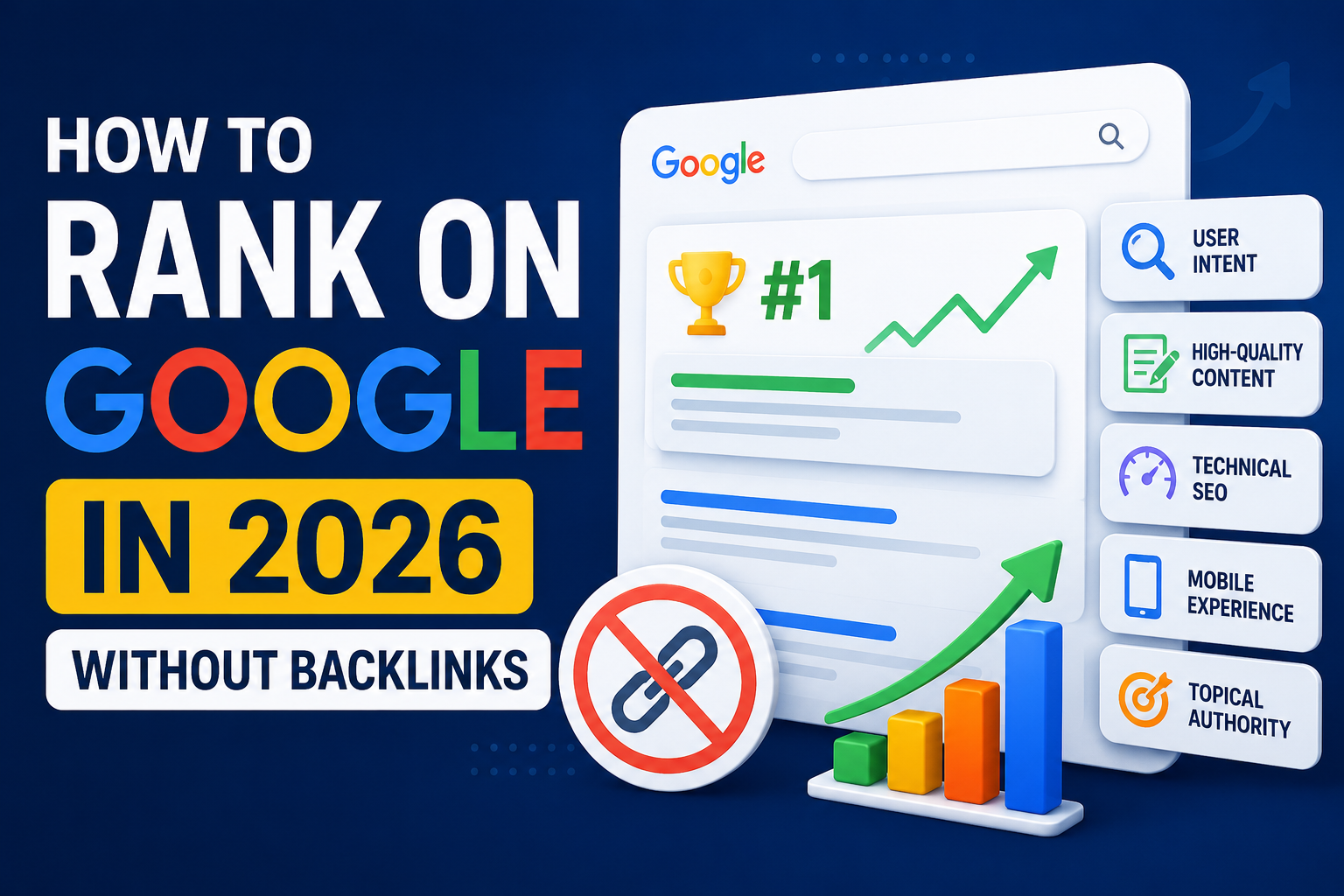
For years, backlinks have been considered one of the strongest ranking factors in SEO. However, Google’s algorithms have evolved significantly, and in 2026, websites can achieve strong rankings without relying heavily on link-building campaigns. Search engines are now better at understanding content quality, User Intent, website experience, and topical expertise. Businesses that focus on delivering value to users can compete successfully even in competitive markets.
The key is to create content that answers search queries better than your competitors while building trust and relevance throughout your website. If you understand what users want and structure your SEO efforts correctly, ranking on Google without backlinks is more achievable than ever.
Understanding User Intent Before Creating Content
One of the biggest reasons websites fail to rank is that they focus on keywords instead of User Intent. Google’s primary goal is to provide the most relevant result for every search query. This means your content must match what the searcher is actually looking for.
For example, someone searching for a product review expects comparisons and recommendations, while someone searching for a tutorial wants detailed instructions. When your content aligns perfectly with User Intent, engagement metrics improve, bounce rates decrease, and Google gains stronger signals that your page deserves higher rankings.
Before publishing any content, analyze the intent behind the keyword and create a page that fully satisfies the user’s needs.
The Power of Low Competition Keywords
Targeting highly competitive keywords without backlinks can be extremely difficult. Instead, focus on low competition keywords that have clear search intent and achievable ranking opportunities.
These keywords often have lower search volumes but attract highly targeted visitors who are more likely to engage with your content. By consistently ranking for dozens or even hundreds of low competition keywords, you can build significant organic traffic over time.
Keyword research tools can help identify gaps where competitors have weak content, allowing you to create better and more comprehensive pages.
Why Topical Authority Matters More Than Links
Google increasingly rewards websites that demonstrate expertise across an entire topic rather than publishing isolated articles. This is where a topical authority strategy becomes essential.
Instead of creating random blog posts, organize your content around a central subject and cover every related subtopic in depth. When Google sees that your website consistently provides valuable information within a niche, it becomes easier for multiple pages to rank.
A strong Topical Authority Strategy helps search engines understand your expertise and relevance, making backlinks less important than they once were.
Creating Content That Fully Answers Search Queries
In 2026, content depth and usefulness are critical ranking factors. Thin articles that barely answer a question rarely perform well in search results.
Your content should provide detailed explanations, examples, practical solutions, and updated information. The goal is to become the best available resource on the topic. When users spend more time reading your content and find the answers they need, Google receives positive engagement signals that can improve rankings.
Quality content remains one of the strongest assets for ranking without backlinks.
How to Build an SEO Strategy for Long-Term Growth
Understanding how to build an seo strategy is crucial if you want sustainable rankings. Successful SEO starts with identifying target audiences, researching search behavior, and creating content plans that align with business goals.
An effective strategy should include keyword research, content creation, website optimization, and performance tracking. Rather than chasing short-term wins, focus on building a website that consistently provides value to visitors.
When every page serves a clear purpose and addresses a specific user need, your website becomes more authoritative in Google’s eyes.
Technical SEO Is No Longer Optional
Even the best content may struggle to rank if search engines cannot properly crawl and understand your website. Technical SEO ensures that your website performs efficiently and provides a positive user experience.
Fast page loading speeds, mobile responsiveness, clean site architecture, secure HTTPS connections, and proper indexing all contribute to better rankings. Google prioritizes websites that offer smooth navigation and quick access to information.
Investing in Technical SEO can often produce stronger ranking improvements than acquiring a handful of backlinks.
Ahrefs vs SEMrush for Modern SEO Research
When researching keywords and competitors, many marketers compare Ahrefs vs SEMrush. Both tools provide valuable insights for identifying opportunities and improving content strategies.
Ahrefs is widely known for its backlink database and keyword research capabilities, while SEMrush offers a broader range of digital marketing tools including content analysis and competitive research. Regardless of which platform you choose, the objective remains the same: discover ranking opportunities, analyze competitors, and create better content.
The real advantage comes from how effectively you use the data rather than which tool you purchase.
Understanding Keyword Intent for Better Rankings
Keyword Intent plays a significant role in determining whether a page ranks successfully. Every keyword represents a specific goal that a searcher wants to accomplish.
Some users want information, others want to compare options, and some are ready to make a purchase. By understanding Keyword Intent, you can create pages that align perfectly with search expectations.
When your content satisfies the intent behind a keyword, search engines are more likely to view it as the best result for that query.
Conclusion
Ranking on Google in 2026 without backlinks is no longer a myth. Search engines now place greater emphasis on content relevance, website quality, user experience, and topical expertise. Businesses that focus on Low Competition Keywords, understand Keyword Intent, implement Technical SEO best practices, and build comprehensive content clusters can achieve impressive results without aggressive link-building.
The future of SEO belongs to websites that genuinely help users. By learning How to Build an SEO Strategy centered around value and expertise, you can earn higher rankings, attract qualified traffic, and establish lasting authority in your industry.