

Sunday, November 22, 2026
Google search engine
Home Blog Page 5

Is RazorGage the Right Saw Stop System for Your Cabinet Shop?

0

RazorGage is a name you hear often in cabinet and door shops, usually from someone who got tired of tape measures and pencil marks. If you have ever cut a hundred rails and found out in part ninety that you were off by a sixteenth, you know that sinking feeling. Hand measuring is slow, and every mistake eats into your material and your day. RazorGage builds programmable saw stops, automatic pushers and optimizing saw systems that take most of that guesswork away. In this post I’ll go through what the company makes, how the systems behave on a real shop floor, and which kind of shop gets the most out of them.

Who Is Behind RazorGage?

The product line comes from Technical Services, Incorporated, a company based in Ames, Iowa. They have been making these machines since 2001, which means the brand has now crossed the 25-year mark. That is a long time in a field where plenty of equipment makers come and go.

Their stated goal from the beginning was fairly simple: make accurate, repeatable automated cutting available to shops of every size, not just the big factories. You will find their machines in small custom cabinet shops and in high-volume door plants. Machines are built to order in the USA, and the company has a reputation for picking up the phone when something needs help. For a buyer, that support part matters almost as much as the machine itself.

How Does a Programmable Saw Stop Help?

Think about how a normal cutting station works. Someone reads a number off a cutlist, slides a stop to that mark, checks it, cuts, and then repeats. Every step is a chance for a slip.

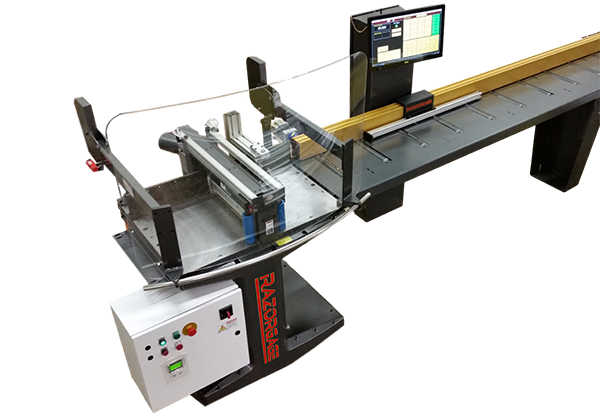
A programmable stop does the reading and the moving for you. You load the cutlist, and the system drives the stop to each length in order. In pusher mode, it also feeds the material forward, so the operator mostly loads boards and makes the cut. The same positioner can work with a chop saw, an upcut saw, a downcut saw, a drill press, and even haunching, notching and punching machines. So it is not tied to one type of tool, which is handy if your shop changes how it works from year to year.

What Makes the Build Quality Different?

This is where RazorGage separates itself from cheaper stop systems. The carriage runs on a hardened and ground Hiwin linear bearing rail with two recirculating ball bearing blocks. That is the same type of rail you see on CNC machining centers, and it gives smooth, nearly friction-free motion with very little flex.

The motion controller is also built to react quickly if a jam happens, which avoids the stretched belts that cause drift on lesser machines. Drift is the quiet killer of accuracy. A stop that is perfect in the morning and a little off by afternoon makes you stop trusting it. Machines built like machine tools tend to hold their numbers, and that is the whole point of buying one.

Where Does the Software Fit In?

Hardware gets the attention, but the software is where a lot of time gets saved. RazorGage uses a program called AutoList, which accepts CSV files from many cabinet design packages such as Cabinet Vision, Microvellum, Mozaik and others. You design the job in the office, send the file over, and the saw gets its numbers without anyone retyping them.

All controllers come with built-in Wi-Fi, so you can send files over the network, Ethernet or a USB drive. The Windows version works like any other PC in the building, so file sharing feels familiar. You can store and sort thousands of cutlists right at the machine, and an optional label printer can tag parts as they come off the saw. Sorting and assembly get much easier when each piece already tells you where it belongs.

There is also a more budget-friendly option, the XT-PC, which comes with a rugged Android tablet and a simple touch interface. It does not carry every feature of the Windows software, but it uses the same kind of mechanical design.

What About Optimizing Saws and Extra Tools?

Once a shop outgrows a basic stop, the next step is usually an optimizing saw. The RazorOptimal saw system is built for that job. It looks at the cutlist and the stock you have, then works out the best way to cut so less material ends up in the scrap bin. It can also use crayon defect marking, so the saw skips around flaws in a board instead of making you toss the whole piece.

Some models add pocket hole drilling in the same pass, which saves a separate trip to another machine. The APS AutoPushing Cutoff System pairs the pusher with the company’s own Cyclone upcut saw for a complete station. And for face frame work, there is a Face Frame Scribe accessory that marks joint locations on cut parts. According to the company, it makes assembly faster, cuts rework and lowers the skill level needed to put frames together.

Who Should Consider a RazorGage System?

If your shop cuts a lot of repeated lengths, such as face frame parts, door rails and stiles, or dimensional stock, a system like this pays for itself in saved labor and saved wood. It also helps shops that struggle to find experienced people, since the machine handles the part that takes skill and attention.

On the other hand, if you only make a handful of one-off pieces each month, a full automatic setup may be more than you need. A simple stop might be enough. The honest answer depends on your volume, your design software, and how much waste you currently see. Talk to the team about your actual workflow before you pick a model.

Conclusion

After more than two decades, RazorGage has built its name on accuracy, solid construction and real support. The positioners handle everyday cutting well, and when you are ready for more, RazorOptimal gives you optimization, defect handling and drilling in one system. Start by looking at how much time and material your cutting station wastes right now. That number usually makes the decision for you.

Frequently Asked Questions

What does RazorGage make?

RazorGage makes programmable saw stops, automatic pushers and optimizing cutoff saw systems. They are used mainly by cabinet makers, door manufacturers and other shops that cut parts to length.

Where is RazorGage located?

The company is based in Ames, Iowa, and its machines are built to order in the USA by Technical Services, Incorporated.

Can RazorGage work with my cabinet design software?

Yes, in most cases. AutoList accepts CSV files from programs like Cabinet Vision, Microvellum and Mozaik, so you can send cutlists straight from the office.

What is RazorOptimal?

RazorOptimal is the optimizing saw system from RazorGage. It plans cuts to reduce waste, can mark defects with crayon, and some versions include pocket hole drilling.

Can I use a RazorGage stop with the saw I already own?

Often you can. The positioners work with chop, upcut and downcut saws, drill presses and other machines. Contact the team to confirm your exact setup.

Contact Us

RazorGage
Address: 57006 241st Street, Ames, IA 50010
Phone: 515.232.3188
Email: sales@RazorGage.com


How to Enjoy a Satisfying Meal on a Plant-Based Diet

0

A plant-based diet can offer a satisfying and flavorful way to enjoy everyday meals while exploring a wide range of vegetables, grains, legumes, fruits, herbs, and spices. For people exploring vegan food Baltimore, there are many opportunities to discover meals that are filling, colorful, and full of different flavors. Eating plant-based does not mean giving up variety or enjoyment. With the right combination of ingredients, a plant-based meal can be both nourishing and deeply satisfying.

Start With a Good Source of Protein

11 Filling food plant ingredients to serve with your meals Protein makes for a satisfying meal, and can be used to meet your body’s essential needs. These protein ingredients come in a range of options that can be served up with a variety of meal types on a plant-based diet: Legumes (chickpeas, kidney beans, black beans, lentils and peas), tofu, tempeh, some grains.

Indian cooking works well if you like vegetarian fare, as beans and pulses feature so strongly in Indian cookery. Heartier beans, chickpea and lentil curries, dal and bean dishes can be as filling and as delicious as other meals without the need for meat. Great served with rice, roti, dosa and other grains.

Add Plenty of Vegetables

Vegetables – Vegetables are a super easy way to add variety to a plant-based meal. Not just a handful of cooked veg thrown onto a plate, try playing around with colors, texture, and cooking methods. Add fresh raw vegetables to a plate to brighten things up, or add crunch with roasted or sauted vegetables.

Purchase every one of your vegetables these can go in a amount of dishes: Leafy greens, cauliflower, carrots, peas, carrots, potato, aubergine, okra, chime pepper, and tomato. The further ways to prepare vegetables with spices and herbs the better; you won’t ever consider every meal the same.

Choose Filling Grains and Carbohydrates

A meal that is satisfying often means adding something else along with the vegetables. You might consider offering grains in the form of rice, quinoa, oats, millet, whole grain breads, potatoes or any other grains.

Ways to Serve Rice-Along with Curries, lentils, Vegetables, or Rich Gravies. Grains in the form of whole grains such as brown rice are more ways to add Color & Texture to your plate. India’s Indian Coffee House: Indian staples of grain, vegetables, and beans – all on one plate and one bite!

Use Spices to Build Flavor

One of the best things about cooking with plants is that you can turn vegetables and pulses into just about anything. From making savoury sauces and seasonings to adding a little zest and spice to your dishes.

Indian foods – spices and more indian spices such as cumin, coriander, turmeric, mustard seeds, cardamom, cinnamon, black pepper – can be added to create layers of flavour. Fresh ingredients such as garlic, ginger, cilantro, chilies and curry leaves create even more character.

The other thing is not only heating the food. When done well with seasoning, that acidity, aroma, and hotness and sweet, and that savoureiness can put a leafy, plant-based plate into a heartier place.

Include Different Textures

Food texture might influence how satisfying the meal is. If everything on the plate is soft and the flavours are palatable, it can become a little dull to eat. Eating different food textures can add interest to your meal.

For example, one plate might include a bowl of saucy lentil dal, a crispy dosa, tender vegetables, fluffy rice, and a crisp green salad. Add some nuts or seeds for crunch and roasted vegetables for flavor and texture, and the food will be more interesting to eat.

Explore Traditional Plant-Based Dishes

You don’t need to be a gourmet to go plant based. Many ethnic foods include recipes using vegetables, grains, beans, lentils and spices.

Many of the options offered in the cuisine of South India are inherently vegetarian options already. Dosa, idli, sambar, and all of the vegetable, rice, and chutney combinations seem unending. Finally, this cuisine is a lesson that a meal can be hearty and satisfying without using super filling ingredients.

Try traditional recipes as well. It may excite your taste buds to move and explore more new foods, sides, and also methods of cooking. Don’t always order the same couple of dishes time and again.

Make Your Meal Balanced

A good plate is typically a collection of multiple foods, not just a single one. Here’s an easy way to think of it: a vegetable, a protein, a grain or other carbohydrate, and a delicious side.

For example, lentil korma, rice, and stir-fried veggies. Dosa with sambar and vegitable-tamarind chutney. Chickpea and grain salad with fresh vegetables, herbs, and a delicious dressing.

Employing this mindset to your meal, plant-based eating becomes much easier because you’re free to combine and substitute ingredients however you want!

Pay Attention to Sauces, Chutneys, and Toppings

Sometimes, all it takes is a few small ingredients to transform a plant-based dish into a masterpiece. You can enhance the texture and flavor of a dish without completely overhauling it by incorporating a chutney, sauce, pickle, herbs, seeds and roasted nuts.

Decorate dosa and idli with coconut chutney, tomato chutney, mint chutney or any other flavorful ketchup. You can add a small amount of fresh coconut, roasted peanuts, sesame seeds or even a touch of lemon juice to make the dish more interesting.

They can also introduce you to new ideas and turn everyday plant-based eating into an exciting experience.

Enjoy Plant-Based Dining at Unavu

If you are a diner who genuinely loves the flavours of plant-based food, and who are looking to explore Indian food based on South Indian style, Unavu will be the place to go. Browsing the menu at a restaurant can be exciting for a plant-based eater as you get to try out various food pairings as opposed to prepare your own meals.

Why to check out south indian meals near me Have a taste of other plant-based delights with the south Indian meal like dosas, lentils, vegetables, rice preparations, and chutneys. Unavu can be a better choice for people who want to enjoy Indian food with the plant-based options.

Conclusion

Enjoying a satisfying plant-based diet is largely about variety, balance, and flavor. Combining vegetables with legumes, grains, spices, sauces, and different textures can turn simple ingredients into enjoyable meals. Exploring cuisines such as Indian and South Indian cooking can make the experience even more interesting by introducing new flavors and traditional plant-based dishes. Whether you prepare meals at home or explore restaurants such as Unavu, there are plenty of ways to make plant-based eating satisfying and enjoyable.

FAQs

1. Can a plant-based meal be filling?

Yes. Plant-based meals can be very filling when they combine protein-rich foods such as lentils and chickpeas with vegetables, grains, and healthy sources of fat.

2. What are some satisfying South Indian plant-based foods?

Dosa, idli, sambar, vegetable curries, rice dishes, and chutneys are examples of foods that can fit well into a plant-based meal, depending on the ingredients used in their preparation.

3. How can I add more flavor to plant-based meals?

Use herbs, spices, chutneys, sauces, fresh vegetables, roasted ingredients, and flavorful seasonings. Indian spices can add depth and variety to vegetables, lentils, grains, and other plant-based foods.

How Adventure Experiences Can Turn Learning Into Something Memorable

0

Learning does not always have to happen inside a classroom or through textbooks and worksheets. Children and young people can understand ideas more deeply when they have opportunities to experience them firsthand. Outdoor learning programs Pennsylvania can make learning more engaging by combining exploration, teamwork, problem-solving, and real-world challenges. When children participate in activities that require them to think, communicate, and make decisions, lessons become experiences they can remember long after the activity is over.

Learning Through Real Experiences

One reason adventure experiences can make learning memorable is that they allow children to learn by doing. Reading about a concept can provide useful information, but experiencing that concept in a real situation can create a stronger connection. For example, children may learn about teamwork in a classroom, but working with a group to complete an outdoor challenge gives them a chance to practice communication and cooperation.

These experiences can help children understand why certain skills matter. Instead of simply being told to listen to others, they may discover that listening is important when a group needs to solve a problem together. Instead of hearing that preparation matters, they may see how planning can make an outdoor activity easier and safer.

Adventure Creates Opportunities to Solve Problems

Adventure activities often present children with situations that require them to think carefully. They may need to decide how to approach a challenge, determine which resources to use, or work with others to find a solution. These situations can turn problem-solving into something practical rather than theoretical.

When children face a challenge, they learn that there may not always be one obvious answer. They may try one approach, discover that it does not work, and then consider another option. This process teaches flexibility and persistence.

Making mistakes can also become part of the learning experience. A supportive environment gives children the opportunity to recognize what went wrong, make adjustments, and try again. These moments can help them become more comfortable with challenges and understand that mistakes can be useful learning opportunities.

Outdoor Activities Make Lessons More Engaging

A change in environment can also affect how children approach learning. Outdoor settings provide new sights, sounds, physical activities, and situations that are different from their everyday routines. This variety can make learning feel less repetitive and more exciting.

An outdoor activity might involve navigating an unfamiliar area, completing a group challenge, observing nature, or working together to accomplish a specific goal. Each experience gives children something concrete to focus on.

Because they are actively involved, children may be more likely to remember what they learned. A lesson connected to a specific experience can become easier to recall because the child remembers not only the information but also what they were doing, who they were working with, and how they solved the problem.

Teamwork Becomes Easier to Understand

Teamwork is another important lesson that adventure experiences can teach. Children often understand cooperation better when they need to depend on one another to complete an activity.

Group challenges can encourage children to communicate clearly, listen to different ideas, divide responsibilities, and support their teammates. They may also learn that successful teamwork is not about one person doing everything. Each person can contribute something useful.

These experiences can also help children recognize different strengths within a group. One child may be good at organizing, another may be comfortable speaking up, while someone else may be patient when the group needs to work through a difficult problem. Learning to value these differences can strengthen social skills and build respect for others.

Challenges Can Build Confidence

Adventure experiences can also help children develop confidence. Completing a difficult activity can give them evidence that they are capable of handling unfamiliar situations.

Confidence does not always come from getting everything right on the first attempt. It can develop when children face something difficult, receive encouragement, make adjustments, and eventually make progress.

For some children, even a small achievement can feel significant. Speaking in front of a group, trying a new activity, helping a teammate, or completing a challenge they initially thought was too difficult can become a meaningful accomplishment.

These moments can influence how children approach future challenges. Once they have experienced success after working through difficulty, they may be more willing to try something unfamiliar again.

Learning Can Become More Social

Adventure-based learning also gives children opportunities to learn from one another. Conversations, shared challenges, and group activities can create natural opportunities for children to exchange ideas and perspectives.

A child may approach a problem differently from their peers. Listening to those ideas can help them understand that there can be multiple ways to solve a problem. They can also learn how to explain their own thinking and respond respectfully when others disagree.

These social interactions are valuable because many important skills are developed through practice. Children learn how to communicate, cooperate, negotiate, and make decisions while working with people around them.

Nature Can Add Another Layer to Learning

Outdoor environments provide opportunities to learn through direct observation. Children can explore natural surroundings, notice changes in their environment, and develop greater curiosity about the world around them.

Nature-based activities can make subjects such as science and environmental awareness more practical. Instead of only reading about ecosystems or natural resources, children can observe their surroundings and ask questions about what they see.

This type of learning can encourage curiosity. When children are given opportunities to explore and investigate, they may begin asking their own questions and looking for answers. That sense of curiosity can make learning more personal and memorable.

Adventure Encourages Children to Step Outside Their Comfort Zones

Trying something unfamiliar can be an important part of growing. Adventure experiences can introduce children to situations that are different from what they normally encounter.

They may need to work with people they have just met, participate in an unfamiliar activity, or handle a challenge without immediately relying on familiar routines. These experiences can encourage independence while still providing the support children need.

Stepping outside a comfort zone does not mean placing children in situations that are overwhelming. The goal is to provide age-appropriate challenges where they can feel supported while developing new abilities.

Over time, these experiences can help children become more comfortable with uncertainty and change.

Memories Can Strengthen the Learning Experience

Memorable experiences often stay with people because they involve emotions, actions, and personal involvement. A child may forget a specific sentence from a lesson, but remember the day their group completed a difficult challenge or the moment they helped a teammate succeed.

These memories can reinforce the lessons connected to the experience. When children later encounter a similar situation, they may remember what they learned and apply it in a new context.

This is one of the strengths of experiential learning. The goal is not simply to make learning entertaining. It is to connect knowledge with real experiences so children can understand how skills and ideas work in practice.

Give Children a Chance to Learn Through Adventure

Families and organizations looking for meaningful experiences can consider programs that combine outdoor activities, teamwork, exploration, and personal growth. An Overnight camp Pennsylvania experience can give children more time to participate in activities, build relationships, practice independence, and learn through new challenges. A supportive camp environment can turn everyday activities into opportunities for growth while giving children memories they can carry with them.

Conclusion

Adventure experiences can make learning memorable because they give children opportunities to participate, experiment, solve problems, communicate, and overcome challenges. Instead of keeping learning separate from everyday experiences, outdoor activities can show children how important skills are used in real situations.

Programs such as Paradise Farm Camp can provide an environment where children have opportunities to learn through exploration, teamwork, and adventure. When learning becomes something children experience for themselves, the lessons can become more meaningful and easier to remember.

FAQs

1. How does adventure-based learning help children?

Adventure-based learning gives children opportunities to practice skills such as teamwork, communication, problem-solving, decision-making, and persistence through real activities.

2. Why is experiential learning memorable?

Experiential learning connects information with personal experiences. Children actively participate in activities, which can make the lessons easier to understand and remember.

3. Can outdoor activities help build confidence?

Yes. Completing new or challenging activities can help children recognize their abilities and become more comfortable trying unfamiliar things.

How to Choose Physical Gold: A Complete Guide to Gold Bars, Coins, Purity, Weight, and Product Specifications

0

Buying physical gold starts with understanding the product you are considering. Gold is available in different forms, including bars and coins, with each product having its own weight, purity, design, and specifications. These details can help you compare available options and decide which format best matches your preferences.

For someone new to physical gold, the number of available choices can seem confusing at first. Two products may look similar but contain different amounts of fine gold, while products with the same gold content may have different designs, manufacturers, or purchase prices.

The best way to approach the buying process is to look beyond appearance alone. Understanding weight, purity, fine gold content, product type, and other specifications gives you a clearer basis for comparing gold products. Your preferred format, intended use, and individual buying goals can also help guide your decision.

Understanding the Different Forms of Physical Gold

Physical gold is commonly available as bullion bars and bullion coins. Both provide a way to own gold in tangible form, but they differ in design, format, and available sizes.

Gold Bars

Gold bars are produced in different weights and may come from recognized refiners or manufacturers. Depending on the product, a bar may display information such as its weight, fineness, refiner, mint, or serial number.

Some buyers prefer bars because of their straightforward design and the range of sizes available. Smaller bars may suit people who want individual pieces in lower weights, while larger bars offer a different way to hold a greater quantity of gold in one product.

When comparing bars, review the stated weight, purity, manufacturer or refiner, and product details. These specifications provide a more useful basis for comparison than appearance alone.

Gold Coins

Gold coins are available in various sizes and designs. Bullion coins are generally valued primarily for their gold content, weight, and purity, although recognition, availability, and other product characteristics can also influence their purchase price.

Some coins are produced by government mints and have established specifications. Others may be associated with collectible or numismatic interest, where factors beyond the gold content can affect their appeal.

If you are considering gold coins, check whether the product is a bullion coin or a collectible coin. Understanding this distinction can help you compare products according to what matters most to you.

Gold Bars vs. Gold Coins: What Should You Consider?

Neither format is automatically the right choice for every buyer. Bars may appeal to people who prefer a simple format and particular weights, while coins may suit those who value specific designs, recognized mint programs, or different size options.

Consider how much gold each product contains, how it is identified, and whether its specifications meet your requirements. If you are comparing several products, reviewing their details side by side can make the differences easier to understand.

Gold Purity and Fine Gold Content Explained

Purity is one of the most important details to check when comparing physical gold. It indicates the proportion of a product made up of gold.

Gold purity is commonly expressed using decimal fineness. For example:

  • .999 fine gold: 99.9% gold.
  • .9999 fine gold: 99.99% gold.

Although these figures are close, they represent different purity levels. Checking the stated fineness helps you understand the composition of a product before making a purchase.

It is also useful to distinguish between total product weight and fine gold content. A product may contain other metals alongside gold, so its overall weight does not always equal the amount of pure gold it contains.

For example, some gold bullion coins are made using a gold alloy to provide additional durability. In such cases, the total coin weight may be greater than the stated fine gold content.

When reviewing a gold product, check its listed purity and fine gold content together. This gives you a clearer understanding of what the product contains and helps you compare it with other available options.

How Gold Weight Affects Product Selection

Gold products are available in different weights, from small fractional-ounce formats to larger bars and one-ounce coins. The weight you choose affects how much physical gold you own in each individual piece.

Gold is commonly measured in troy ounces when describing bullion. One troy ounce is approximately 31.1035 grams.

Fractional-ounce products contain less than one troy ounce of gold. These may be available in sizes such as one-half, one-quarter, or one-tenth of a troy ounce, depending on the product.

When comparing weights, keep the following points in mind:

  • Check the stated unit: Confirm whether the weight is given in grams or troy ounces.
  • Review fine gold content: Make sure you understand how much gold the product contains.
  • Compare similar formats: Comparing products with similar weights and purity levels can make their differences easier to evaluate.
  • Consider your preferred size: Individual pieces may be easier to organize in different ways depending on their size and quantity.

The right weight depends on your preferences and the amount of physical gold you want to own. There is no single size that suits every buyer.

Understanding Gold Product Specifications

Beyond weight and purity, several other specifications can help you evaluate a gold product.

Mint or Refiner

The mint or refiner identifies the organization responsible for producing or refining the product. Reviewing this information can help you understand its origin and compare products from different sources.

Product Identification

Some bars include identifying details such as a serial number, fineness, weight, or manufacturer information. Coin specifications may include the mint, denomination, design, and stated gold content.

These details help distinguish one product from another. Keep product documentation and purchase records where available so you can refer to the specifications later.

Product Type and Design

A gold bar and a gold coin can contain similar amounts of fine gold while differing in format and design. Bullion coins may feature established designs, while bars generally have a simpler appearance.

Design can be an important personal preference, but it should not replace a review of the product’s actual gold content and specifications.

Understanding Gold Pricing and Product Value

Gold product prices can vary even when two products contain similar amounts of fine gold. Differences may relate to the product format, manufacturing and distribution, availability, mint or refiner, market demand, and other specifications.

For a more meaningful comparison, review the total purchase price alongside the amount of fine gold, purity, weight, and product type. Comparing products on the basis of their actual specifications can help you understand why their prices differ.

Gold market prices can also change over time. As a result, a product’s purchase price today may not be the same as its price at another time.

It is helpful to separate the underlying gold content from other product characteristics. A design, brand, or recognizable appearance may influence a product’s appeal, but those features do not change the stated amount of fine gold it contains.

Before making a decision, review the current product details and make sure you understand what is included in the quoted price.

Storage and Care for Physical Gold

After choosing physical gold, consider how you will store and keep track of it. Your preferred arrangement may depend on the quantity of gold you own, the size of the products, accessibility, and your personal circumstances.

Some people consider secure private storage, while others may explore professional storage arrangements. The appropriate choice depends on individual needs and the nature of the holding.

A few practical steps can help you stay organized:

  • Keep purchase records and product documentation.
  • Record each product’s weight, purity, and identifying details.
  • Store products in a manner appropriate for their type and condition.
  • Review your storage arrangements as your holdings or circumstances change.

Gold held through a retirement account is subject to separate account and storage requirements. If you are considering that route, understand those requirements before selecting products.

Physical Gold and Gold IRA Eligibility

Some retirement account holders explore a self-directed Gold IRA as a way to hold certain physical precious metals within an eligible retirement account. However, buying physical gold directly and holding eligible gold through an IRA are different arrangements.

Not every gold coin or bar automatically qualifies for an IRA. Eligibility depends on applicable requirements and the specific product. Account holders should also understand the role of the custodian and the storage arrangements required for metals held through the account.

If you are considering gold for a retirement account, verify the eligibility of the exact product before proceeding. Reviewing the account structure, applicable rules, and storage requirements can help you understand the process more clearly.

You can learn more about the available physical gold products at Jefferson Gold and explore Gold IRA information at Jefferson Gold’s Gold IRA resource.

A Practical Checklist Before Choosing Gold

Before purchasing gold bars or coins, take a moment to review the following details:

  1. Product type: Is it a gold bar, bullion coin, or collectible coin?
  2. Weight: How much does the product weigh?
  3. Purity: What fineness is stated?
  4. Fine gold content: How much actual gold does the product contain?
  5. Mint or refiner: Who produced or refined it?
  6. Product identification: Are the specifications and identifying details clear?
  7. Purchase price: How does the price compare with the product’s gold content and specifications?
  8. Storage: How will you keep the product secure and maintain its records?
  9. IRA eligibility: If applicable, has the specific product been checked against the relevant requirements?
  10. Buying goals: Does the product match your preferred format, size, and intended use?

Working through these points can make it easier to compare options without relying on appearance or a single product feature.

Conclusion

Choosing physical gold becomes more straightforward when you understand the details behind each product. Gold bars and coins differ in format, weight, purity, design, and specifications, so it is worth reviewing these characteristics before making a decision.

Focus on fine gold content, stated purity, product weight, mint or refiner, current pricing, and storage considerations. If you are considering a Gold IRA, also verify the specific product’s eligibility and understand the account and storage requirements that apply.

There is no universal choice that works for everyone. The right product depends on your preferences, circumstances, and buying goals. Jefferson Gold provides information about physical gold products to help customers review available options and make informed decisions.

What to Know Before Buying Aluminum Boat Docks

0

If you own waterfront property you’ve probably typed this into Google at least once. Are aluminum boat docks actually worth it, or is it just a nice sales pitch? I hear it all the time, usually from somebody standing on a soft, gray wood dock that’s one bad board from dumping them in the lake. Short answer for most people: yes. The longer answer depends. Depends on your water, your budget, how long you’re staying, and honestly how much you hate spending a Saturday with a paint sprayer and a can of stain when you could be fishing. Aluminum is light, it doesn’t rot, and bugs don’t care about it. But it’s not magic, and I’m not going to pretend it is. So here’s what you’re really buying, where the money goes, and the stuff you should push your builder on before you hand over a deposit.

How Long Does Aluminum Actually Last?

This is the question that matters most. A well built marine-grade aluminum dock can go twenty, thirty years, sometimes more. Wood, even the pressure treated kind, usually starts giving up around ten to fifteen, and that’s if you keep sealing it and get a little lucky with the winters. Aluminum doesn’t soak up water. No splinters. Carpenter bees leave it alone. That’s most of the pitch right there. Now, cheap ones do fail, I’ve seen it. Welds crack, thin tubing bends the first time a heavy boat bumps it, and bolts corrode fast when somebody mixes the wrong metals together. Ask what alloy they use. For most marine work you want 6061 or 5052, and if you’re on saltwater you need to be even pickier. If the seller shrugs and says “it’s marine grade” and nothing else, I’d walk. A brochure saying aluminum doesn’t mean much. How it’s welded does. I’d take a mid-priced dock with clean, ugly-but-strong welds over a shiny cheap one every time.

What It Costs up-front and down the Road

Okay, money. Aluminum costs more than basic wood at the start, sometimes a lot more depending on size and decking. Figure somewhere around twenty to fifty bucks a square foot installed, though it swings a ton based on where you live and how messy your shoreline is. Add a lift or a ramp or a roof and the number climbs quickly. But people forget the other side of math. Wood needs stain, new boards, new hardware, sometimes half a section rebuilt after a hard winter with ice pushing on it. Aluminum mostly needs a hose. If you’re staying fifteen years, it usually comes out ahead and it isn’t super close. If you’re selling in three, maybe wood is fine, I won’t argue. Be honest with yourself about that part. And one more thing, a clean solid dock helps when you sell. Buyers walk down to the water first, almost always, and they notice.

Picking a Style That Fits Your Shoreline

Fixed, floating, pipe, roll-in. There are a lot of options and the right one comes down to your actual water, not what looked good in a catalog. Deep water where the level swings a lot usually wants floating sections. Shallow and steady, a fixed frame on posts does fine. Rocky bottoms are a headache, and soft muck is a different headache. The nice thing is aluminum boat docks work with most of these setups because the material is strong for how little it weighs, so a couple of guys can move sections around, adjust them, or pull them out for winter without hauling in heavy equipment. In cold places that’s huge, since ice will chew up anything you leave in the water. Walk the shoreline with your builder before you decide anything. Tell them how big the boat is, who uses the dock, whether kids and dogs run wild out there. Good builders ask questions. Lazy ones just hand you a catalog.

So, Why Put a Roof Over the Boat?

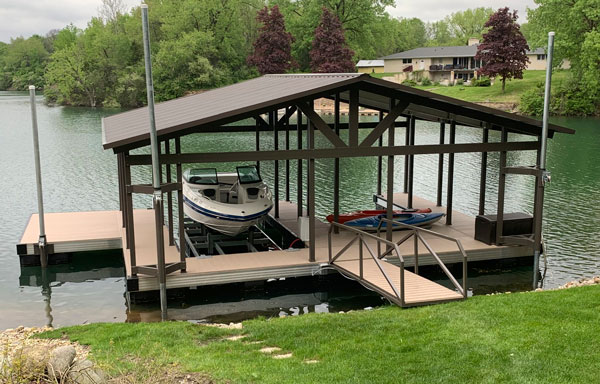
The sun is brutal on boats. People don’t realize how brutal until they see a faded dash or a cracked seat after a few summers. UV eats gel coat, bakes the interior, and rain collects in spots that turn into mildew. A roof fixes most of that. And if you’re looking at covers, Hip Roof Covered Boat Docks are popular for a good reason. The roof slopes down on all four sides instead of just two, so wind has less surface to grab and less chance of lifting the whole thing. If you get summer storms that come out of nowhere, that’s worth thinking about. They also just look finished, kind of balanced, and some owners care about that more than they’ll admit. I don’t think a roof is a luxury when the boat’s worth thirty, forty thousand dollars. It’s closer to cheap insurance, honestly.

Frame, Footings, and the Weight Nobody Plans For

Here’s a mistake I see over and over. Somebody puts in a light dock, then two years later decides they want a covered slip, and the frame can’t handle it. Now it’s a rebuild. A roof adds weight, wind load, and in snowy areas a serious snow load, because wet snow piling on a big roof is no joke. Hip Roof Covered Boat Docks need posts, footings and bracing designed for all that from day one, not bolted on later like an afterthought. So tell your builder about the roof before anybody pulls out a tape measure. Ask for drawings. Ask about wind ratings. Ask about permits too, since a lot of towns and lake associations have rules about structures over the water and roofs usually get more scrutiny. A solid builder won’t mind any of this. A nervous one will tell you plenty just by the way they dodge. Go with that feeling, it’s usually right.

Upkeep, Safety, and the Small Stuff

Aluminum isn’t zero maintenance. Nothing outside is. But it’s close. Rinse off algae and bird mess a couple times a season. Check bolts every spring, tighten what’s loose, and look around the fittings for that white powdery stuff, which is corrosion starting. Sweep leaves off the roof if you’ve got one. That’s about it, no sanding, no sealing, no lost weekend. Most owners I talk to spend an hour or two a month in peak season, and half of that is just standing there enjoying it. Comfort matters too. Aluminum decking stays cooler on bare feet than dark wood, which your kids will love in July when they’re sprinting down the dock. Get a slip-resistant surface, add solar lights, maybe some reflective strips, handrails if older family members visit. Plan for your clumsiest guest, not your most coordinated one. That rule alone has saved people from some ugly falls.

Conclusion

So, are aluminum boat docks worth it? If you’re planning to stay a while, I’d say yeah, they are. They last longer, they weigh less, rot and bugs don’t touch them, and they leave your weekends alone. The up-front price stings a little, no way around it. But add a well engineered roof, especially a hip style that handles wind and keeps sun and rain off your boat, and you’ve got something that protects your money and makes time on the water better. Do your homework though. Ask about alloys, welds, warranties, load ratings, permits. Get a few quotes and compare them for real. Talk to people who’ve owned theirs for ten years, not ten months. Don’t rush it. This is one of those purchases you’ll either enjoy every day or regret every day, so take your time.

FAQs

How long do aluminum docks last?

Most well built marine-grade aluminum docks run twenty to thirty years, sometimes longer with basic care. Wood usually needs big repairs a lot sooner than that.

Are aluminum docks better than wood?

For most people, yes. They resist rot, insects and splinters. Wood looks warmer and costs less at first, but it takes way more upkeep over the years.

Can I use an aluminum dock in saltwater?

You can, but you need the right alloy, usually 5052 or 6061 marine grade, plus compatible stainless hardware. Rinse it regularly, it helps slow corrosion.

Do I need a permit for a covered dock?

Often, yes. Rules change by town, state and lake association, so check first. Roofs over water tend to get stricter reviews than open docks.

Are hip roofs better than gable roofs on docks?

In windy areas, usually. A hip roof slopes on four sides, which cuts wind lift. Gable roofs can work too, but the open ends catch more gusts.

Ultimate Guide to Using Kryolan Makeup for Professional-Level Results

0

Studio lights are rude. They turn “looks fine” into “why is my face textured” in one photo.

This guide is focused on Kryolan makeup.

Kryolan was built for stage and camera, so tiny technique shifts make a big difference. Safety matters too: in the EU Safety Gate report for 2024, cosmetics were the most reported product category (36%).

Now use this like a cheat map: scan the headings, jump to the one that matches your struggle (cakey base, creasing, flashback, patchy blend), and start there.

Why Kryolan Can Look Flawless (or way too much)

Kryolan formulas are often more pigmented than typical everyday makeup. That is the magic, and also the trap. If you apply it the same way you apply a light foundation, you can get a thick, mask-like base fast.

Two quick mindset shifts make it “professional-level”:

  • Use less product than you think you need
  • Build coverage only where the camera will notice (center of face, under-eyes, redness zones)

If you want a cream base that can still sit in a fine layer, products like Kryolan Supracolor are designed for high coverage with a thin application.

Your Skin Prep is Half The Result

If your base separates, cracks, or turns patchy, it is usually not the foundation. It is the prep.

Prep that fits your skin type

  • Oily skin: go light on heavy creams, focus on hydration that absorbs, then a pore-smoothing primer only where needed
  • Dry skin: moisturize well, wait a minute, then use a smoothing primer to help creams glide
  • Texture and pores: press primer into the area, do not rub it around

Quick Prep Checklist

  • Clean skin
  • Moisturizer (let it settle)
  • Primer (only where it helps)
  • Lips are moisturized early, not at the last minute

The Base Map: Choose Finish First, then Coverage

Kryolan has iconic base options, and the trick is picking what you need, not what looks viral.

TV-style Stick Base (fast coverage, controlled placement)

Kryolan’s TV Paint Stick is known for strong coverage and a matte finish, built with high pigment for strong concealing power.

How to Make a Stick Base Look Skin-like

  • Warm a small amount on the back of your hand first.
  • Pick it up with a sponge or dense brush.
  • Apply in thin strokes only where you need coverage.
  • Blend outward until edges disappear.

Camouflage Coverage (spots, discoloration, tattoos)

Dermacolor Camouflage Creme is designed to correct discoloration and cover concerns like tattoos and visible marks.

Use it like a specialist tool, not like your full foundation.

Spot-conceal Method

  • Tap on the spot.
  • Feather the edges.
  • Set that spot before you move on.

Correct and Brighten Without Turning Grey

High coverage under the eyes is where most “pro makeup” fails in real life. The fix is not more concealer. The fix is smarter placement.

Under-eye Rules that Prevent Creasing

  • Do not take heavy product right up to the lashes.
  • Keep the thickest coverage at the inner corner and the darkness zone.
  • Blend with a damp sponge, then stop touching it.

Quick Correction Cues

  • Blue or purple tone: Use a peach corrector first
  • Redness: Use a green corrector only on the red areas
  • Brown pigmentation: Use a warm corrector, then a thin concealer layer.

Set Like a Pro (without cake)

Powder is not the enemy. Random powder is.

Press, then Sweep

  • Pressing absorbent creams into place.
  • Sweeping removes excess and keeps it smooth.

Kryolan Translucent Powder is designed to enhance wear and is available in translucent and tinted options.

Anti-Crease Checklist

  • Set in small sections (do not powder the whole face at once).
  • Press powder under the eye, then lightly sweep the edges.
  • Keep the under-eye thin, and let the base settle before powder.

Lock it in for Events, Heat, and Long Days

If you want “it survived the day,” wear finishing is your insurance.

Kryolan Fixing Spray is positioned as a long-wear finisher that creates a protective film over makeup.

A Realistic Way to Use the Fixing Spray

  • Use it after powder, not before
  • Mist lightly (you want a veil, not a wet face)
  • Let it dry fully before touching your skin.

Pro Details that Lift the Whole Face

These are the small things that read big on camera.

Brows that Look Clean, not Stamped

  • Fill in gaps with light strokes.
  • Comb through after filling.
  • Set brows last so they stay flexible.

Blush and Contour that Do Not Look Muddy

  • Put blush slightly higher than you think.
  • Keep the contour soft and placed where a natural shadow would be.
  • Step back and check symmetry before you add more.

Lips that Last

  • Outline lightly.
  • Fill the whole lip with a pencil for grip.
  • Tap lipstick on in layers, do not swipe thick.

Troubleshooting: Quick Fixes for the Most Common Kryolan Problems

If Your Base Looks Cakey

  • Use less product.
  • Add moisture to the sponge.
  • Apply only to the center, then blend outward.

If it Looks Patchy

  • Your primer and base might be fighting.
  • Remove the patch, re-prep that area, and reapply in a thinner layer.

If Your Under-eye Creases

  • You used too much product.
  • Use a thinner layer, set sooner, and stop blending once it is smooth.

If Your Face Looks Flat in Photos

  • Add warmth with blush and bronzer.
  • Brighten the center lightly; do not over-highlight.

Buying Smart and Shade Matching (plus a quick local note)

When you buy pro makeup, authenticity and shade match matter more than hype. Test shades on the jawline in natural light, and pick the one that disappears into both face and neck.

If you are shopping from a trusted online beauty store in Pakistan, look for sealed packaging, clear batch details, and shade support so you do not end up guessing your match from photos.

Final Words…

Professional-level results with Kryolan are not about piling on coverage. They are about control. Thin layers, smart placement, and clean setting.

Start with one hero product, then master it. A stick base or a cream palette can do a full face when you treat it like paint, not lotion. If something looks off, do not restart everything. Fix the one step that caused it, usually prep, placement, or powder. Once you nail that, the “camera-ready” look stops feeling hard.

FAQs

Q1. Is Kryolan makeup only for stage and heavy looks?

A. No. It is made for performance, but you can wear it daily if you use thin layers and keep coverage only where needed.

Q2. What is the easiest Kryolan product for beginners?

A. A base product like a stick foundation is usually the simplest because it is quick to place and then blend out.

Q3. How do I stop Kryolan cream makeup from creasing?

A. Use less product, let it settle, then press powder in small sections. Avoid over-blending once it is smooth.

Q4. Can Kryolan cover pigmentation and marks?

A. Yes. Camouflage products are designed for strong correction and coverage, including discoloration and tattoos.

Q5. Do I really need a fixing spray?

A. If you want long wear for events, heat, or long shoots, it helps. Fixing sprays are designed to improve durability and keep the finish stable.

How Family Caregivers Can Support Aging Parents While Protecting Their Own Time, Health, and Well-Being

0

Caring for an aging parent can be one of the most meaningful things a family can do. It can also become overwhelming when work, children, household responsibilities, and personal commitments are added to the picture. Many adult children try to handle everything themselves because they want their parent to feel supported and safe. Over time, however, constantly being available can leave family caregivers feeling exhausted, stressed, and unsure of how long they can keep going.

The good news is that caring for an aging parent does not have to mean giving up your own health, time, or well-being. With the right support and a realistic care plan, families can create a healthier balance while helping their loved ones remain comfortable at home.

Recognize When You Need More Support

One of the first steps is recognizing that asking for help is not a failure. Your parent may still be independent in many areas but need assistance with certain daily activities.

Perhaps they need help preparing meals, keeping the house organized, getting to appointments, or simply having someone around for companionship. In other situations, they may need assistance with bathing, dressing, grooming, mobility, or other personal routines.

These needs can gradually increase, making it difficult for one family member to handle everything alone. In-home care services can provide additional support while allowing an aging parent to remain in a familiar home environment.

Telford Loving Care is preparing to provide non-medical senior care designed around the individual needs of families in Alpharetta, Roswell, and Milton.

Create a Care Routine That Works for Everyone

A consistent routine can make caregiving easier for both the senior and the family. Start by identifying the times when your parent needs the most assistance.

For example, mornings may involve getting dressed and preparing breakfast, while afternoons may include errands or appointments. Evenings may require help with meals, personal routines, or simply having someone nearby.

Once you understand these patterns, you can decide which responsibilities family members can reasonably handle and where additional support may be useful.

The goal is not to remove family involvement. Instead, it is to make family involvement more sustainable.

Protect Your Own Time

Family caregivers often put their own needs last. They may postpone exercise, social activities, appointments, hobbies, or even basic rest because they feel guilty about stepping away.

That approach can eventually lead to burnout.

Schedule personal time just as you would schedule a caregiving responsibility. Even a few hours away can give you an opportunity to rest, spend time with your family, work, exercise, or simply enjoy some quiet time.

Respite care can also give family caregivers a temporary break while their loved one continues receiving appropriate support. Telford Loving Care is preparing respite care as part of its planned senior care services in North Fulton.

Consider Personal Home Care When Daily Tasks Become Difficult

Sometimes an aging parent needs more hands-on assistance than family members can comfortably provide.

Personal home care in Alpharetta, GA can be helpful for seniors who need support with daily routines such as bathing, dressing, grooming, mobility, toileting, hygiene, or eating. These are personal tasks, and having a consistent, respectful caregiver can make the experience more comfortable for everyone involved.

Telford Loving Care’s planned personal care services are designed around dignity, privacy, and individualized support rather than treating every family situation the same way.

Understand When More Consistent Care May Be Appropriate

Some families eventually reach a point where occasional visits are no longer enough. A parent may need more consistent assistance throughout the day and night.

Live-in care is one option families may consider when a senior needs ongoing support while continuing to live at home. This type of arrangement can provide a consistent presence, companionship, and assistance with personal care throughout the day and night.

Telford Loving Care is preparing live-in care for seniors in Alpharetta, Roswell, and Milton who may need more continuous non-medical support at home.

Keep Your Relationship With Your Parent Personal

Caregiving can sometimes make a parent and adult child feel like their relationship has become entirely about tasks.

Try to protect the personal side of your relationship.

Talk about family memories. Watch a favorite movie together. Cook a familiar meal. Listen to music. Take a short walk if possible. These simple moments can help maintain the connection that existed before caregiving responsibilities became part of everyday life.

Professional support can make these moments easier because family time does not always have to revolve around appointments, meals, medications, cleaning, or personal routines.

Build a Care Team Instead of Carrying Everything Alone

The healthiest caregiving arrangement is often one where responsibilities are shared.

Family members can contribute in different ways, while professional caregivers can provide support with daily needs. Telford Loving Care is building its care model around compatibility-based caregiver matching, with the goal of connecting families with an ALTRU-trained caregiver who fits their loved one’s needs, comfort, and personality.

Caring for an aging parent is a journey, not something you have to manage perfectly every day. Protecting your own health and time allows you to remain present for the person you love without losing yourself in the process.

Telford Loving Care is preparing to support families across Alpharetta, Roswell, and Milton with thoughtful, non-medical in-home senior care built around dignity, consistency, and meaningful human connection.

Final Thought

Supporting an aging parent and taking care of yourself are not competing priorities. With thoughtful planning, family involvement, and the right level of professional support, both can have a place in a healthy caregiving relationship.

When Should You Find a New Dentist in Burbank?

0

People get weirdly loyal to their dentist, even when things clearly aren’t working anymore. I get it, finding someone new feels like a hassle, paperwork, explaining your history all over again, hoping the new office actually gets your insurance right. But staying with a dentist just out of habit, especially one that’s not serving you well, that’s not really loyalty, that’s just inertia. There’s actual signs worth watching for, and if you’re noticing a few of these, it’s probably time to start looking for a new dentist in Burbank instead of just putting up with it.

You Keep Having To Wait Weeks For An Appointment

This one drives me nuts honestly. You call to book something routine, a cleaning, whatever, and they tell you the next opening’s six weeks out. Fine occasionally, offices get busy. But if this happens every single time you try to book, that’s a pattern, not a coincidence. And it gets worse when something actually urgent comes up, a cracked tooth, sudden pain, and there’s no way to get seen quickly. That’s when you really need access to an emergency dentist, not a scheduling system that makes you wait like it’s a regular Tuesday problem.

dentist in Burbank

They Never Really Explain What’s Going On In Your Mouth

Good dental care means understanding what’s actually happening, not just nodding along while someone pokes around with a metal tool for twenty minutes. If your dentist rushes through appointments without explaining findings, or brushes off your questions with vague one-liners, that’s a red flag. You should walk out knowing why a filling’s needed, what a treatment actually involves, roughly what it’ll cost. If you’re constantly confused after appointments, or feel like you’re being talked at instead of talked to, that’s worth paying attention to.

Pricing Feels Off Or Inconsistent Every Time

I’m not saying dental services should be cheap everywhere, they’re not, good dentistry costs money. But if pricing feels wildly different visit to visit for similar work, or if you’re getting surprise charges that were never mentioned upfront, something’s not right. A solid dentist in Burbank should be upfront about cost before treatment starts, not after. If you constantly feel blindsided by your bill, that’s not a minor annoyance, that’s a trust issue, and trust matters a lot when someone’s working inside your mouth.

The Office Feels Rushed, Like You’re Just A Number

You ever walk into an appointment and just feel like cattle being processed through? In and out in eight minutes, nobody really looking at you, just going through motions. That’s not necessarily bad dentistry technically, but it’s a sign the practice has grown past the point of actually caring about individual patients. Dental care works better when there’s some continuity, when the dentist actually remembers your history instead of flipping through a chart cold every single visit. If that personal element’s completely gone, it might be time to look elsewhere.

No Emergency Options When You Actually Need One

This is a big one and people don’t think about it until they’re in pain at 9pm on a Friday. Does your current dentist even offer emergency dentist access, or same-day appointments for urgent stuff? A lot of practices simply don’t, they’ll tell you to go to urgent care or an ER for anything outside normal office hours, which honestly isn’t great when it’s a dental-specific problem. If you’ve ever been stuck scrambling to find an emergency dentist because your regular office couldn’t help, that’s genuinely worth factoring into whether you stick around.

You’ve Outgrown What They Actually Offer

Sometimes it’s not that anything’s wrong exactly, you’ve just outgrown the practice. Maybe you started needing cosmetic work, implants, more specialized dentistry, and your current dentist doesn’t really do that stuff, keeps referring you out constantly. Nothing wrong with referrals occasionally, but if it’s happening for almost everything beyond basic cleanings, you might be better off just finding a dentist in Burbank who offers a broader range of dental services under one roof. Saves you the hassle of juggling multiple offices for different needs.

Your Gut’s Been Telling You Something For A While

This sounds unscientific but honestly, trust your gut here. If you’ve been feeling uneasy about a recommended treatment, or something about the office just feels off, weird vibe, rushed staff, you’re not imagining it necessarily. A second opinion never hurts, and if multiple visits leave you feeling more anxious than reassured, that’s data too, even if it’s not the kind you can measure. Dental anxiety’s real for a lot of people, and the right dentist should actually ease that, not add to it.

Reviews And Reputation Have Shifted

Worth occasionally checking what people are currently saying about your dentist, even if you’ve been going there for years. Staff changes, ownership changes, sometimes quality shifts and you don’t notice because you’re just used to going. If recent reviews mention longer waits, staff turnover, or declining quality compared to a few years back, that lines up with maybe what you’ve been quietly noticing yourself. Doesn’t hurt to double check every so often instead of assuming things are exactly like they were when you first started going.

dental care

Switching Isn’t As Big A Deal As It Feels

I think people overestimate how painful switching actually is. Most dental offices can request your records pretty quickly these days, and a lot of new patient exams are actually pretty thorough anyway, giving a fresh dentist a solid baseline to work from. It’s a little bit of hassle upfront for potentially years of better dental care afterward, that trade-off usually makes sense when you actually think it through instead of just avoiding the whole decision because it feels inconvenient in the moment.

Wrapping It Up

Staying with a dentist out of habit isn’t the same as staying because they’re actually good. If you’re dealing with long wait times, unclear communication, confusing bills, no real emergency dentist access, or just a nagging feeling something’s off, those are all legitimate reasons to start looking elsewhere. Finding a new dentist in Burbank takes a little effort, sure, but so does dealing with bad dental care for years just because switching feels inconvenient. Your mouth’s worth better than settling, honestly.

Smart Insurance Tips for Truck Owners in Colorado Springs

0

If you own a truck in Colorado Springs, insurance probably isn’t the most exciting thing on your to-do list. Fair enough. There’s always something else to deal with. A customer needs a job finished, the truck needs maintenance, and somehow there’s never enough time in the day. Still, getting the right truck insurance in Colorado Springs matters. One bad accident, theft, hailstorm, or even a simple mistake can turn into a very expensive headache.

The thing is, you don’t want to buy insurance just because somebody tells you that you need it. You want to understand what you’re actually paying for. And more importantly, whether it will help when you really need it.

Start With How You Use Your Truck

This sounds basic, but it’s where a lot of truck owners get things wrong.

How you use the truck makes a difference. If you’re using it to haul tools to job sites, deliver materials, pull a trailer, or transport equipment for customers, your insurance needs can be different from someone who only drives their pickup to work and back.

Be upfront with your insurance company about what the truck does. Don’t say it’s for personal use if you’re using it for business. Saving a little money now isn’t worth finding out later that your claim has a problem.

Think about where you drive too. Mostly around Colorado Springs? Traveling across Colorado? Going into other states? These details matter more than people realize.

Don’t Just Pick the Cheapest Truck Policy

Everybody wants to save money. Nothing wrong with that.

But there’s a difference between getting a good price and simply buying the cheapest policy you can find.

When comparing truck insurance Colorado Springs policies, look at the actual coverage. What are the liability limits? What’s the deductible? Is damage to your truck covered? What happens if someone without enough insurance hits you?

A policy can look cheap until you actually need to use it.

Sometimes paying a little more for better protection makes a lot more sense than saving $20 or $30 a month and getting stuck with a huge bill later.

Colorado Weather Can Be Rough on Trucks

If you’ve lived around Colorado Springs for a while, you already know the weather doesn’t always play nice.

Hail is a good example. A storm can roll through, and suddenly your truck has a bunch of dents. Snow, ice, falling branches, and other weather-related problems can cause damage too.

That’s where comprehensive coverage can be useful. It generally helps with certain types of damage that aren’t caused by a collision, including things like theft and hail.

You might think, “It probably won’t happen to me.” Maybe it won’t. But trucks spend a lot of time outside. It’s something worth considering.

What’s Inside the Truck?

Here’s another thing people sometimes forget.

The truck may be insured, but what about the stuff you’re carrying?

If you’re a contractor with several thousand dollars worth of tools in the truck, you should know exactly what happens if those tools are stolen. The same goes for equipment, supplies, or customer property you’re transporting.

Don’t assume everything inside the vehicle is automatically covered. It may not be.

Ask about equipment and cargo coverage based on what you actually carry. The right answer will depend on your business, so this is one of those areas where a quick conversation with an insurance professional can save some trouble later.

Commercial Auto Insurance Colorado Springs and Liability

If the truck is being used for business, liability coverage deserves serious attention.

Commercial auto insurance Colorado Springs policies are designed for business use, and that can be important if you’re involved in an accident while working. You could be dealing with vehicle repairs, property damage, medical expenses, or other costs.

And those costs can add up fast.

You should also look at who drives the truck. If employees or other workers use company vehicles, make sure your policy reflects that. If you occasionally use rented vehicles or employees use their own vehicles for business errands, ask whether hired or non-owned auto coverage makes sense.

It’s not exciting stuff. But neither is dealing with a claim that isn’t covered.

Your Driving Habits Still Matter

There’s no magic trick here.

Drive carefully.

Tickets and accidents can make insurance more expensive, and distracted driving is obviously a bad idea when you’re behind the wheel of a heavy vehicle or towing something.

If you run a small business and have employees driving your trucks, pay attention to their driving records too. You don’t need to make it complicated. Just have some basic rules and make sure people understand them.

One driver making a bad decision can affect the whole business.

Review Your Insurance Once in a While

Don’t buy a policy and forget about it for five years.

Businesses change. Trucks change. Drivers change. Your work might change too.

Maybe you bought another truck. Maybe you started taking jobs farther away. Maybe you’re hauling more expensive equipment now. All of that can affect what kind of coverage you need.

Take a look at your policy at least once a year. It doesn’t have to be a big production. Just make sure the coverage still matches what you’re doing.

You might even find a better rate or a discount you didn’t know about.

Ask Questions Before Something Goes Wrong

One of the smartest things you can do with commercial auto insurance in Colorado Springs is ask questions before you have a claim.

What exactly is covered? What isn’t? Who can drive the truck? What’s the deductible? Is your equipment covered? What happens if another driver has no insurance?

These aren’t complicated questions, but they can get overlooked when you’re busy.

And honestly, you don’t want to learn the answers after an accident.

Conclusion

Getting the right truck insurance Colorado Springs coverage doesn’t mean buying every possible add-on and hoping for the best. It means looking at how you actually use your truck and making sure your policy fits that situation.

Pay attention to liability coverage. Think about hail and other Colorado weather. Don’t forget about tools and equipment. Keep an eye on who drives the truck, and review the policy when your business changes.

Insurance isn’t something most truck owners enjoy thinking about. Nobody wakes up excited to read a policy. But taking a little time now can make a big difference if something goes wrong later.

That’s really the point of truck insurance in Colorado Springs. You’re not buying a piece of paper. You’re buying some protection for the truck, the business, and the work you’ve put into building it.

Knee Pain Relief Equipment: Essential Features to Look for When Choosing a Device

Knee pain has a funny way of getting in the way of normal life. You sit down, stand up, walk around, and there it is again. For some people, a little extra support can make things easier, which is where knee pain relief equipment comes in. There are plenty of devices out there, though, and honestly, they’re not all worth the money. Some are useful. Some just look impressive in an online listing.

So, what should you actually look for?

Think About What Your Knee Needs

First things first, don’t buy a device just because it says “pain relief” on the box.

Different products work in different ways. Some use heat. Others use cold, compression, vibration, or massage. A heated wrap might feel good when your knee is stiff after sitting around. A compression sleeve could be more useful when your knee feels tired after being on your feet all day.

It really depends on what you’re dealing with.

And if the pain is ongoing or comes from an injury, it’s worth getting it checked out instead of trying to fix everything with a gadget. These devices can help with comfort, but they aren’t a replacement for proper medical care.

Adjustable Settings Are a Big Plus

One feature I’d definitely look for is adjustable intensity.

Why? Because your knee probably doesn’t feel the same every day. Some days you might want stronger vibration or massage. Other days, even a little pressure can feel like too much.

A device with different intensity levels gives you some room to adjust things. That’s much better than having one setting and hoping it suits you.

The same goes for heat. If you’re buying a heated device, check whether you can change the temperature. A simple low, medium, and high option is usually enough. You don’t need a hundred settings.

A timer is useful too. It means the device can shut itself off after a certain amount of time instead of running until you remember to turn it off.

Make Sure It Actually Fits

This sounds obvious, but it gets overlooked.

If a knee device doesn’t fit properly, you’re probably not going to use it much. Look for adjustable straps and a design that stays in place when you move. It shouldn’t be squeezing your leg like a tourniquet, but it also shouldn’t slide halfway down your calf.

Comfort matters even more if you plan to use it for 15 or 20 minutes at a time.

Think about the material as well. Something soft against the skin is a lot nicer than rough fabric or stiff plastic. And if the thing weighs a ton, well, good luck wanting to wear it regularly.

What About Massage and Vibration?

This is where knee massagers come into the picture.

Some people like the feeling of vibration or gentle massage around the knee because it can help them relax and feel less stiff. If that’s what you’re after, look for a model where you can control the strength.

Don’t automatically go for the strongest option either. More pressure doesn’t mean better results. Sometimes it just hurts.

It’s also worth checking where the device actually applies the massage. You generally want it working around the knee and surrounding muscles, rather than putting unnecessary pressure directly on a sore joint.

If a device combines massage and heat, that can be convenient too. Two functions in one is handy, especially if you don’t want several different gadgets lying around.

Battery Life Is More Important Than It Sounds

Nobody wants to charge a device every single time they use it.

If you’re buying something rechargeable, check how long the battery is supposed to last. You don’t need it to run for twelve hours, obviously. But it should comfortably handle a few sessions before needing another charge.

This is especially useful if you travel or want to use it away from a wall socket.

Also, keep the controls simple. Buttons that are easy to understand are better than some complicated little control panel with tiny symbols everywhere. You should be able to put the device on and get it working without sitting there trying to figure out what each button does.

Don’t Ignore Safety Features

With knee pain relief equipment, safety should be part of the decision, not something you check after buying it.

Automatic shut-off is useful, particularly with heated products. Overheating protection is another feature worth looking for.

Check what the manufacturer says about using the device on injured or sensitive areas too. Heat, compression and massage aren’t suitable for every situation. If you’re unsure, ask a healthcare professional first.

And yes, read the instructions. Not the most exciting thing in the world, but still worth doing.

Keep Cleaning and Storage in Mind

Your knee device is going to touch your skin. Maybe sweaty skin, too, depending on when you use it.

So look for something easy to clean. Removable covers or wipe-clean surfaces are a good start. If the straps can be washed, even better.

Storage is another small thing. A bulky device that takes up half a cupboard isn’t ideal. If it’s compact and easy to put away, you’re more likely to keep using it.

Noise can matter as well. Some vibration devices are surprisingly loud. If you’re trying to watch TV or work while using one, that can get annoying pretty quickly.

Don’t Assume Expensive Means Better

Price is obviously part of the decision, but it shouldn’t be the only thing you look at.

A more expensive device might have extra features you don’t actually need. Meanwhile, a simpler model could do exactly what you want.

Look at the build quality, settings, battery, comfort, warranty, and general usability. Then compare those things with the price.

Customer reviews can help too. Just don’t get carried away by one person saying a product “changed their life.” Look for patterns. If lots of people complain about the battery dying quickly or the straps coming loose, pay attention to that.

Conclusion

There’s no single piece of knee pain relief equipment that’s going to suit everyone. The useful one is the device that fits your needs and, more importantly, one you’ll actually use.

Look for adjustable settings, a comfortable fit, decent battery life, sensible safety features, and materials that are easy to clean. If you’re looking at knee massagers, make sure you can control the massage or vibration rather than being stuck with one aggressive setting.

Don’t get distracted by a long list of features either. Sometimes a simple device that does its job properly is all you need. Fancy buttons are nice. A comfortable knee is nicer.