



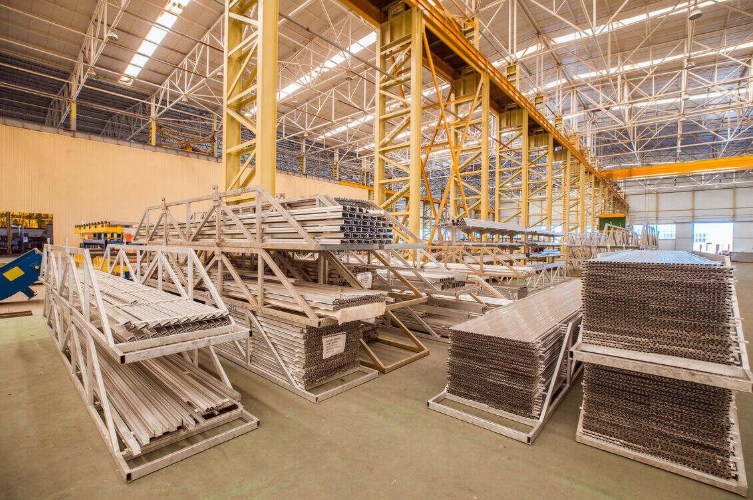
Creating an industrial frame involves careful consideration of the materials used and the intended application of the equipment. Choosing the right aluminum framing material can provide manufacturers with strong, light, and flexible structures for machinery, production lines, and safety enclosures. However, there are many mistakes that can be made during the design stage that could cause instability, increased costs, difficult assembly, and increased maintenance requirements. This information can help your engineers and manufacturers design a frame that meets your operational requirements.
1. Wrong Material Choice
One of the most common errors when designing an industrial frame is not considering the requirements for the application. Depending on the requirement, you could have Aluminium, steel, or other materials.
Aluminium is a light material with anti-corrosive properties and is easy to assemble. If however, your application requires high strength, then steel may be a better option. Choosing an incorrect material based solely on price could cause issues.
Consideration should be given to what the frame will be carrying, environmental conditions, strength requirements, and whether modifications will be required in the future. Choosing the right material will give you a good balance between performance and durability and will keep your project costs down.
2. Not Considering Load/Weight
All industrial frames will be required to carry the weight of the equipment, components and materials. Failure to consider this could cause excessive flexing, vibration and cause instability.
When designing your frame, you should consider what the total expected load will be and choose the right profiles and fixings. You should consider what dynamic loads will be carried. This will be any loads placed onto the frame due to the movement, starting/stopping, and changing directions of the machinery.
It is also important to consider how the weight will be distributed. An uneven weight distribution could cause weakness in certain areas. Carefully calculating the weight will help keep your frame stable.
3. Ignoring Size Considerations
Your frame could look perfect on paper but fail to fit into your production area correctly. Incorrect measurements could cause issues with machinery, cause restricted movement for your operatives, and cause difficulties with maintenance.
Before designing your frame, measure your floor space and consider what size all your equipment will be. Ensure you have space for cabling, pneumatics, access panels and moving parts.
It is important to consider accessibility. Your operatives and maintenance teams should have enough space to complete their tasks.
4. Poor Fixings
Even if you have designed a good frame, if your fixings are not suitable for the application, you could have issues with instability. This could be caused by using incorrect brackets, loose fixings, and incorrect joints.
Fixings should match the profiles and load requirements. Consider how much vibration will be present and how much movement there will be. Consider if fixings will come loose.
By ensuring you have compatible fixings and following the manufacturer’s guide for assembling your frame, you will have a more stable frame. If you are carrying large loads or lots of movement, then consideration should be given to how you join everything.
5. Not Considering Vibration
Many industrial machines will cause vibrations. If your frame is not designed to cope with this, then you could experience misalignment, fixings coming loose, and issues with the equipment.
This is particularly important for conveyor belts, automated production equipment and moving machinery. You should consider the source of the vibration and how strong it is. This will help you pick the correct-sized profiles and fixings.
In some cases, you may require extra bracing, the correct supports and vibration dampers. By trying out your design with realistic conditions, you will be able to see if there will be any issues.
6. Over-Complication
Using too many supports, fixings and bespoke parts can increase your manufacturing costs. It can also make assembly more difficult. A complex frame can also cause delays to repairs.
Keeping your frame simple will help keep your costs down. By using standard profiles and compatible parts, you will reduce the amount of bespoke parts you will need.
Modular frames can help by allowing you to add/remove/change parts. Keeping your design simple will help you get the right strength.
7. Not Considering Future Changes
As your production increases, new machines are brought in, or processes change, your industrial requirements could change. If you don’t design your frame for future changes, it could cause increased costs to modify.
Consider if you will need to add extra sensors, safety guards, conveyors, control panels, or workstations. Ensuring you have the correct mounting points and space will help keep your modifications simple.
Flexible framing can help you. You will be able to change sections of your frame. By considering future requirements, you can reduce downtime.
8. Not Reviewing/Looking at Testing
If you rush into creating your frame without reviewing your design, you could miss some key mistakes. Issues with sizing, weight distribution, clearance, and component compatibility could cause issues.
By reviewing your design, you will allow your engineers to look at the frame. Using digital models will help identify if components will fit together. Calculating your loads will help identify any potential weak spots.
If possible, try building a prototype and testing it. Generally, it is cheaper to review your design.
Build Better Industrial Frames with MiniTec Solutions
Choosing the right framing system will make your industrial project easier to design, assemble and maintain. MiniTec Solutions can provide aluminium framing solutions to help give you a flexible, strong and adaptable frame for your industrial requirements. Our engineers can help your business determine what framing you will need and what components would be suitable. Working with our experienced team can help you avoid these common mistakes. We can help you assemble your frame more efficiently and ensure your frame will support your production goals. Contact us today to discuss your application and find the practical solution for your framing.
Conclusion
Designing an industrial frame involves consideration of your materials, loads, measurements, fixings, vibration, and flexibility. By avoiding these common mistakes, you can reduce unnecessary costs for your manufacturers and increase the reliability of your equipment. With careful consideration and professional engineers, you can easily design frames that will meet your current production requirements and allow room for improvements.
FAQs
1. What should I consider when designing an industrial frame?
When designing an industrial frame, you must consider what load you will be supporting, what material strength you require, how big your frame will be, what environment it will be used in, what fixings you will be using, how much vibration there will be, and whether you will need to modify it in the future.
2. Why is aluminium often used for industrial framing?
Aluminium frames are lightweight, resistant to corrosion, and easy to assemble. With many modular options, aluminium frames are great for use as supports for machinery, workstations, safety, and manufacturing equipment that may need to be modified in the future.
3. How can I strengthen my industrial frame?
To strengthen your frame, always calculate the loads correctly. Choose the right-sized profiles and ensure that the fixings are compatible. Bracing can be used in certain areas. Consider the vibrations and uneven loading. Always review your frame design before assembling to see if there are any weak points.