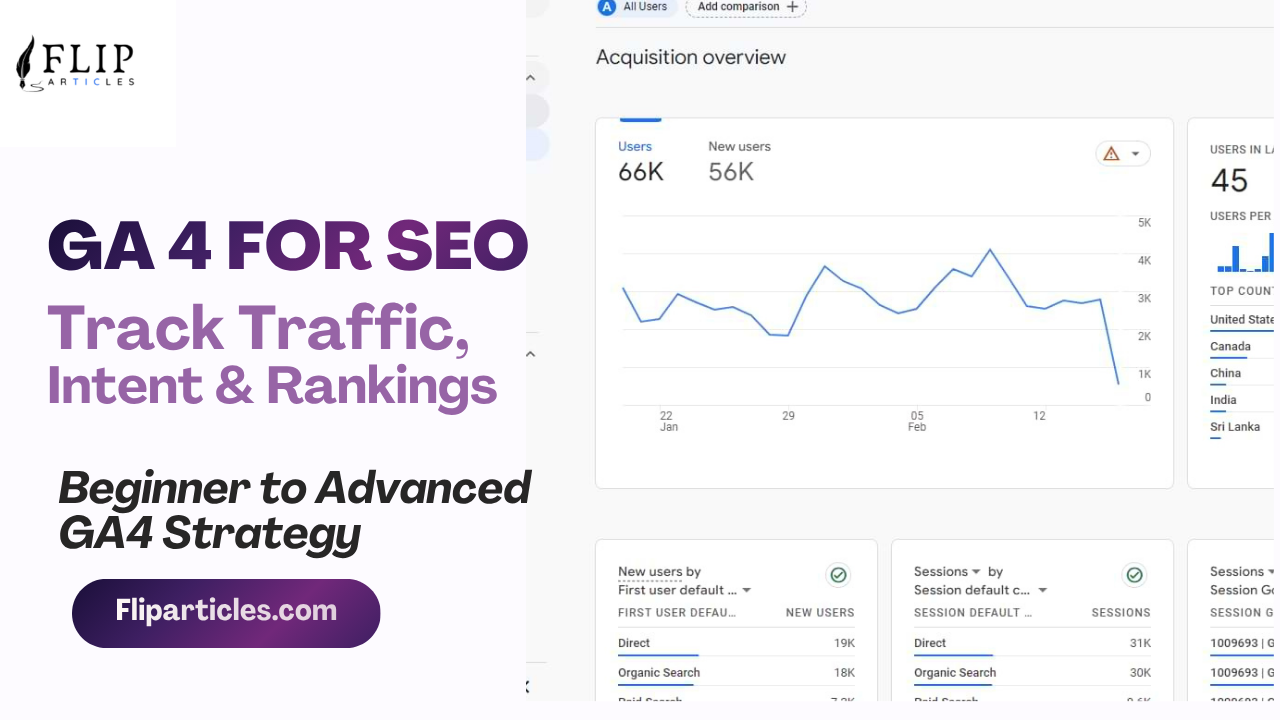
If you’re still measuring SEO success only by traffic, you’re already behind. Modern search is no longer about just ranking keywords—it’s about understanding user behavior, intent, and context. That’s exactly where Google Analytics 4 becomes essential for anyone serious about building a scalable and future-proof SEO strategy.
In this guide, you’ll learn how to use Google Analytics for SEO tracking in a way that aligns with semantic search, entity-based optimization, and evolving systems like Google MUVERA, where a single query can carry multiple meanings and user intents.
Why Google Analytics 4 Matters for SEO Today
To understand the importance of GA4, you first need to understand how Google works today. Search engines have evolved far beyond simple keyword matching. They now interpret meaning, relationships between topics, and how users interact with content after clicking on it. This means rankings are influenced not just by relevance, but also by how well your content satisfies user intent.
GA4 gives you access to this behavioral layer. Instead of just showing how many users visited your website, it reveals what they did, how long they stayed, whether they engaged, and if they converted. These insights directly connect with modern SEO signals, making GA4 a powerful tool for improving your rankings in a meaningful way.
The key shift here is simple: SEO is no longer just about getting clicks—it’s about earning engagement.
Understanding SEO Through Data and User Intent
When people search online, they don’t just type keywords—they express intent. This concept, often referred to as keyword intent in SEO, is critical because it determines what type of content should rank. Some users want information, others want comparisons, and some are ready to take action.
GA4 helps you decode this behavior. By analyzing engagement metrics such as session duration, scroll depth, and user flow, you can identify whether your content aligns with user intent or not. For example, if users land on a page and leave quickly, it may indicate a mismatch between what they expected and what they found.
This is where understanding how search engines work becomes practical rather than theoretical. Search engines prioritize content that satisfies users, and GA4 gives you the data needed to measure that satisfaction.
Setting Up Google Analytics for SEO Tracking
To use GA4 effectively for SEO, integration is everything. Connecting it with Google Search Console allows you to combine keyword-level insights with user behavior data. This connection bridges the gap between what people search and how they interact with your content after clicking.
Similarly, integrating Google Tag Manager enhances your ability to track custom events such as scroll depth, button clicks, and form submissions. These micro-interactions provide deeper insights into user engagement, which is a crucial ranking signal in today’s SEO landscape.
Once these integrations are in place, GA4 becomes more than just an analytics tool—it becomes a decision-making engine for your SEO strategy.
Tracking the Right SEO Metrics in GA4
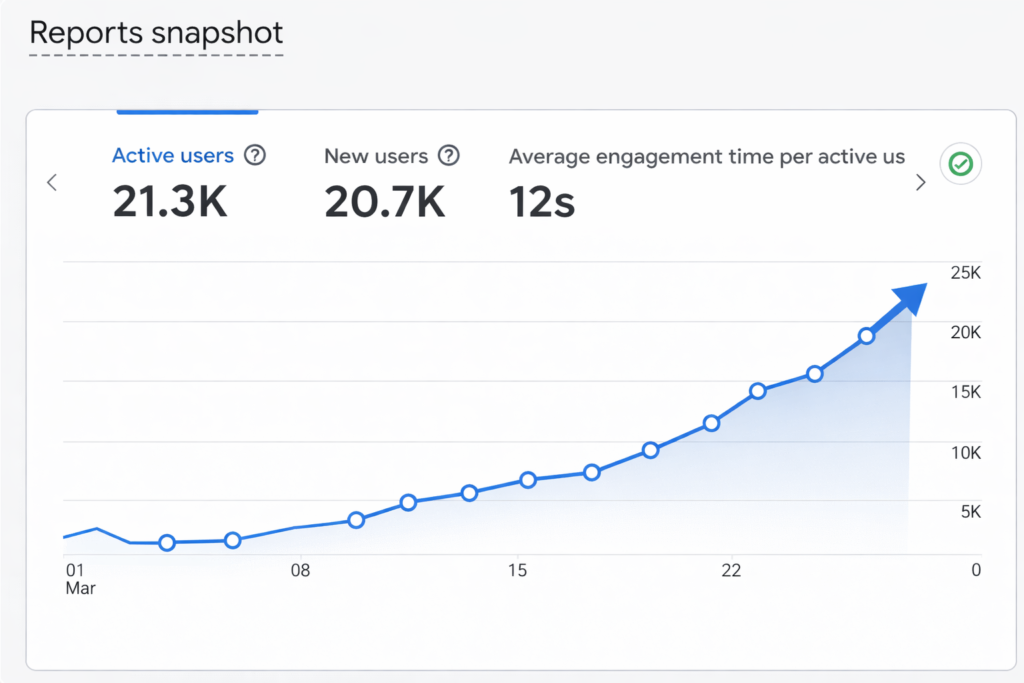
One of the biggest mistakes in SEO is focusing on vanity metrics. Traffic alone doesn’t tell the full story. What truly matters is how users behave after arriving on your site. GA4 allows you to analyze organic sessions alongside engagement rate, average engagement time, and conversions.
When you look at landing pages in GA4, you can identify which pages attract organic traffic and how effectively they retain users. Pages with high traffic but low engagement often signal a content gap. This is an opportunity to refine your content, align it better with intent, and improve its overall quality.
This data-driven approach transforms your SEO strategy from guesswork into a structured optimization process.
Using GA4 to Build a Strong SEO Strategy
A successful SEO strategy today is built on continuous improvement, not one-time optimization. GA4 supports this by helping you identify patterns and trends in user behavior. For example, if certain topics consistently generate higher engagement, it indicates strong relevance and authority in that area.
This is where the concept of a topical authority strategy comes into play. Instead of targeting isolated keywords, you build clusters of related content that cover a topic in depth. GA4 helps you validate these clusters by showing which topics resonate most with your audience.
At the same time, you can identify low competition keywords by analyzing pages that receive traffic but have room for improvement in engagement or conversions. Optimizing these pages often delivers quicker SEO wins compared to targeting highly competitive terms.
Entity SEO and Semantic Search in GA4
Modern SEO revolves around entities rather than just keywords. Entities are real-world concepts that search engines understand, such as brands, tools, or topics. GA4 helps you evaluate how well your content performs around these entities by tracking engagement across related pages.
For example, if your website covers topics like technical SEO, keyword research, and analytics tools, GA4 can show which of these areas drives the most meaningful interactions. This insight allows you to strengthen connections between topics, improve internal linking, and build a more cohesive content ecosystem.
This approach aligns perfectly with semantic search, where the goal is to provide comprehensive and contextually relevant information rather than isolated keyword-focused content.
Multi-Intent SEO and the Role of GA4
With advancements like MUVERA, search queries are no longer single-dimensional. A user searching for “Google Analytics for SEO” might be looking for a guide, a comparison, or a practical setup tutorial—all at once.
GA4 helps you track these multiple intents by analyzing user journeys. By observing how users navigate your site, which pages they visit next, and where they drop off, you can identify gaps in your content strategy. This allows you to create multi-intent content that satisfies different types of users within a single page.
The result is better engagement, improved rankings, and higher conversion rates.
Improving Technical SEO with GA4 Insights
Although GA4 is primarily a behavioral analytics tool, it plays a significant role in improving technical SEO. By identifying pages with high bounce rates or low engagement, you can uncover underlying issues such as slow loading speeds, poor mobile experience, or weak content structure.
When combined with performance tools, GA4 helps you prioritize fixes that have the greatest impact on user experience. This ensures that your website not only ranks well but also delivers a smooth and satisfying experience to visitors.
Final Thoughts
Using Google Analytics for SEO is no longer optional—it’s essential. In a world where search engines prioritize user experience, GA4 provides the insights needed to understand, optimize, and scale your content effectively.
Instead of relying on assumptions, you can make data-driven decisions that align with user intent, semantic search, and entity-based optimization. This not only improves your rankings but also builds long-term authority in your niche.
If you want to stay ahead in SEO, start using GA4 as more than just a reporting tool. Use it as a strategy engine that guides every decision you make.
Frequently Asked Questions
What is Google Analytics 4 in SEO?
How does GA4 help in understanding user intent?
Can GA4 replace keyword research tools?
Why is engagement important for SEO?
About the Author