



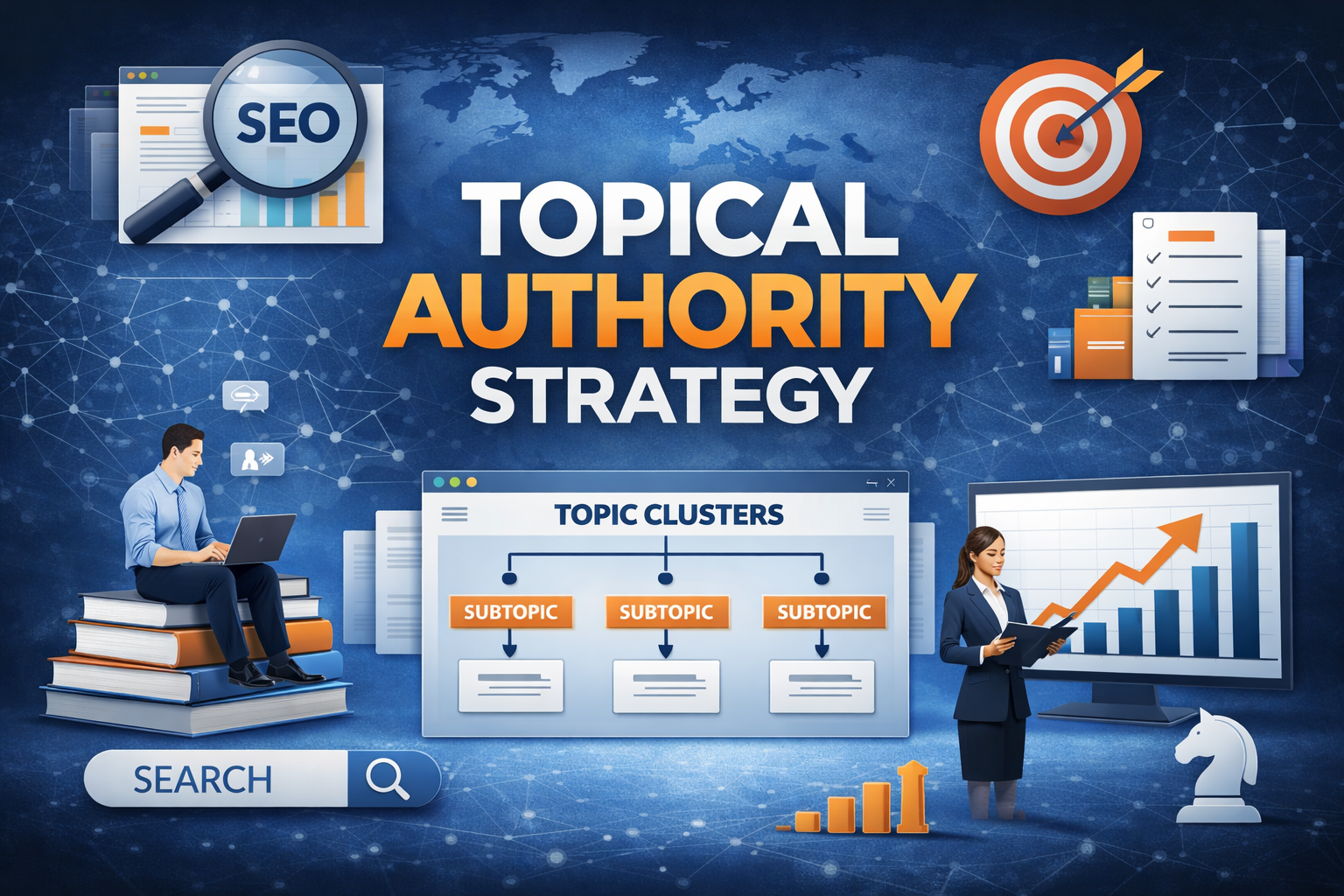
If you want to rank consistently on Search Engines, you need more than just individual blog posts; you need a solid topical authority strategy. Instead of targeting random keywords, this approach focuses on building a comprehensive content ecosystem around a specific subject. By doing so, you signal to search engines that your website is a trusted source, which significantly improves your chances of dominating SERPs. Whether you’re a beginner or have some SEO experience, understanding how to structure topic clusters can transform your organic growth.
What is Topical Authority in SEO?
One way to think about topical authority is seeing it like building layers around a single idea. Instead of dropping random posts, imagine linking each piece so they form a web of useful answers. Because of this structure, visitors find what they’re looking for without jumping elsewhere. Search tools notice when people stay longer and return often. Over time, those signals tell algorithms that your site knows its stuff. Pages start rising in results simply because they make sense together. Expertise shows up not through claims but through consistency.
Why Topic Clusters Matter for Rankings
What holds a strong topical authority plan together? Topic clusters do. One central pillar page teams up with several related articles, all connected by links. Because these pages point to each other, search engines get a clearer picture of how topics fit. Navigation becomes smoother for bots, plus people find what they need faster. Over months, sites built this way often gain nearly twice as much organic reach – some track growth near 40%. That boost comes from matching the way algorithms judge what content truly covers a subject.
Understanding Keyword Intent in SEO
Before building your cluster, it’s essential to understand Keyword Intent in SEO. Not all keywords serve the same purpose. Some users are looking for information, while others are ready to make a purchase. The main types of intent include informational, navigational, transactional, and commercial. Aligning your content with the right intent ensures that you meet user intent effectively. For example, a pillar page might target a broad informational query, while cluster articles focus on more specific or transactional queries.
Types of SEO You Need to Combine
One way to boost visibility? Blend several kinds of SEO work. Headings, word choice, and clear writing – these shape on-page strength. Backlinks do their part by lifting credibility from outside. Site speed, structure, layout – all those quiet details matter just as much. Layer them right, the result holds up whole groups of related pages while pushing position across search results.
How to Build an Effective Topic Cluster
Start by picking one main idea that fits both your specialty and what readers are looking for. Following that, build a central guide covering the full scope of the topic. Once done, break it down into smaller themes, then write separate pieces exploring each part more closely. Every related article must point toward the main hub, also connecting sideways when topics overlap. Links woven like this help search engines see how everything ties together.
Creating High-Quality Pillar Content
Start off broad, then go deep – this page ought to cover everything about the subject. Put it together carefully so it flows naturally from one part to the next. Headings must stand out, sentences stay brief, words feel alive without trying too hard. Try mixing in real cases, numbers that matter, steps someone could actually follow. When done right, people arrive through search – and stick around because something feels useful. Moving between topics should happen smoothly, almost by accident.
Writing Supporting Cluster Articles
One way to build around a central subject? Tackle separate but connected issues in their own posts. Each piece dives into narrow searches people actually make. Take SEO planning as the core idea – then explore things like finding search terms, fine tuning web pages, or how links are gathered. Zooming in helps show up for more varied phrases online. Authority grows when small subjects get detailed attention. A stronger presence forms slowly, through focused answers.
Optimising Internal Linking Structure
Pages deep inside your site gain strength when linked wisely. One main page ties related posts together through clear word cues in links. From those side pages, pathways lead back to the center piece just as naturally. Tying them all forms a web that both readers and robots move across without trouble. When connections are built with care, visibility grows while people stay put longer.
The Role of Content Depth and Consistency
Every time you post solid work, trust grows. Search bots notice when fresh material appears often, treating sites as current. Full coverage pulls more weight; diving deep into subjects opens doors to many searches at once. Rather than skimming surfaces, build rich pieces that truly support readers. What sticks isn’t speed – it’s substance shown over months.
Common Mistakes to Avoid
Jumping between random subjects? That spreads your credibility thin. What people actually want might slip through if search purpose gets overlooked. Links buried or missing mess up how pages connect. Structure fades when there’s no clear path. Forced keywords drag down flow, make things awkward to read. Meaning matters more than packing phrases – write like a person, not a robot.
Measuring the Success of Your Strategy
Start by watching how much organic traffic you get, since it shows whether people are finding your pages. Keyword positions shifting upward? That usually means search engines see your site as more relevant. When searches lead to more clicks and views, your topics likely resonate. Time spent on a page often grows if visitors feel they’re learning something useful. Bounce rates tend to drop when what you say matches what readers need. Freshening up old posts now and then keeps them sharp. Better answers today help tomorrow’s rankings too.
Conclusion
Building a successful topical authority strategy is not a one-time task but an ongoing process. By creating well-structured topic clusters, aligning content with user intent, and maintaining consistency, you can significantly improve your rankings in search engines. Moreover, combining this approach with strong site performance and optimization practices ensures long-term success. When paired with effective technical SEO, your strategy becomes even more powerful, helping your website achieve sustainable growth and dominate SERPs.