



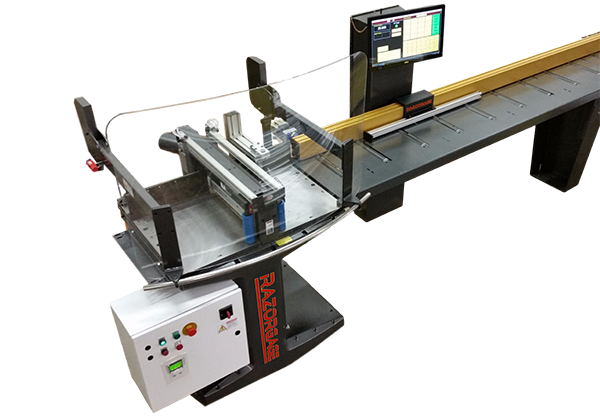
RazorGage is a name you hear often in cabinet and door shops, usually from someone who got tired of tape measures and pencil marks. If you have ever cut a hundred rails and found out in part ninety that you were off by a sixteenth, you know that sinking feeling. Hand measuring is slow, and every mistake eats into your material and your day. RazorGage builds programmable saw stops, automatic pushers and optimizing saw systems that take most of that guesswork away. In this post I’ll go through what the company makes, how the systems behave on a real shop floor, and which kind of shop gets the most out of them.
Who Is Behind RazorGage?
The product line comes from Technical Services, Incorporated, a company based in Ames, Iowa. They have been making these machines since 2001, which means the brand has now crossed the 25-year mark. That is a long time in a field where plenty of equipment makers come and go.
Their stated goal from the beginning was fairly simple: make accurate, repeatable automated cutting available to shops of every size, not just the big factories. You will find their machines in small custom cabinet shops and in high-volume door plants. Machines are built to order in the USA, and the company has a reputation for picking up the phone when something needs help. For a buyer, that support part matters almost as much as the machine itself.
How Does a Programmable Saw Stop Help?
Think about how a normal cutting station works. Someone reads a number off a cutlist, slides a stop to that mark, checks it, cuts, and then repeats. Every step is a chance for a slip.
A programmable stop does the reading and the moving for you. You load the cutlist, and the system drives the stop to each length in order. In pusher mode, it also feeds the material forward, so the operator mostly loads boards and makes the cut. The same positioner can work with a chop saw, an upcut saw, a downcut saw, a drill press, and even haunching, notching and punching machines. So it is not tied to one type of tool, which is handy if your shop changes how it works from year to year.
What Makes the Build Quality Different?
This is where RazorGage separates itself from cheaper stop systems. The carriage runs on a hardened and ground Hiwin linear bearing rail with two recirculating ball bearing blocks. That is the same type of rail you see on CNC machining centers, and it gives smooth, nearly friction-free motion with very little flex.
The motion controller is also built to react quickly if a jam happens, which avoids the stretched belts that cause drift on lesser machines. Drift is the quiet killer of accuracy. A stop that is perfect in the morning and a little off by afternoon makes you stop trusting it. Machines built like machine tools tend to hold their numbers, and that is the whole point of buying one.
Where Does the Software Fit In?
Hardware gets the attention, but the software is where a lot of time gets saved. RazorGage uses a program called AutoList, which accepts CSV files from many cabinet design packages such as Cabinet Vision, Microvellum, Mozaik and others. You design the job in the office, send the file over, and the saw gets its numbers without anyone retyping them.
All controllers come with built-in Wi-Fi, so you can send files over the network, Ethernet or a USB drive. The Windows version works like any other PC in the building, so file sharing feels familiar. You can store and sort thousands of cutlists right at the machine, and an optional label printer can tag parts as they come off the saw. Sorting and assembly get much easier when each piece already tells you where it belongs.
There is also a more budget-friendly option, the XT-PC, which comes with a rugged Android tablet and a simple touch interface. It does not carry every feature of the Windows software, but it uses the same kind of mechanical design.
What About Optimizing Saws and Extra Tools?
Once a shop outgrows a basic stop, the next step is usually an optimizing saw. The RazorOptimal saw system is built for that job. It looks at the cutlist and the stock you have, then works out the best way to cut so less material ends up in the scrap bin. It can also use crayon defect marking, so the saw skips around flaws in a board instead of making you toss the whole piece.
Some models add pocket hole drilling in the same pass, which saves a separate trip to another machine. The APS AutoPushing Cutoff System pairs the pusher with the company’s own Cyclone upcut saw for a complete station. And for face frame work, there is a Face Frame Scribe accessory that marks joint locations on cut parts. According to the company, it makes assembly faster, cuts rework and lowers the skill level needed to put frames together.
Who Should Consider a RazorGage System?
If your shop cuts a lot of repeated lengths, such as face frame parts, door rails and stiles, or dimensional stock, a system like this pays for itself in saved labor and saved wood. It also helps shops that struggle to find experienced people, since the machine handles the part that takes skill and attention.
On the other hand, if you only make a handful of one-off pieces each month, a full automatic setup may be more than you need. A simple stop might be enough. The honest answer depends on your volume, your design software, and how much waste you currently see. Talk to the team about your actual workflow before you pick a model.
Conclusion
After more than two decades, RazorGage has built its name on accuracy, solid construction and real support. The positioners handle everyday cutting well, and when you are ready for more, RazorOptimal gives you optimization, defect handling and drilling in one system. Start by looking at how much time and material your cutting station wastes right now. That number usually makes the decision for you.
Frequently Asked Questions
What does RazorGage make?
RazorGage makes programmable saw stops, automatic pushers and optimizing cutoff saw systems. They are used mainly by cabinet makers, door manufacturers and other shops that cut parts to length.
Where is RazorGage located?
The company is based in Ames, Iowa, and its machines are built to order in the USA by Technical Services, Incorporated.
Can RazorGage work with my cabinet design software?
Yes, in most cases. AutoList accepts CSV files from programs like Cabinet Vision, Microvellum and Mozaik, so you can send cutlists straight from the office.
What is RazorOptimal?
RazorOptimal is the optimizing saw system from RazorGage. It plans cuts to reduce waste, can mark defects with crayon, and some versions include pocket hole drilling.
Can I use a RazorGage stop with the saw I already own?
Often you can. The positioners work with chop, upcut and downcut saws, drill presses and other machines. Contact the team to confirm your exact setup.
Contact Us
RazorGage
Address: 57006 241st Street, Ames, IA 50010
Phone: 515.232.3188
Email: sales@RazorGage.com