



Fertility treatment is an important step to start the journey towards parenthood for couples who are experiencing infertility. For some, it can be an unexpected part of the journey, and for some, it can be the element of surprise. Regardless of circumstances, it is common for those starting a fertility journey to encounter a range of new abbreviations and terminology. In this article, you will get to know complete details about intracytoplasmic sperm injection and when to consider this procedure at the best IVF centre in Punjab under the guidance of experienced and qualified IVF specialists.
Let’s understand what intracytoplasmic sperm injection is.
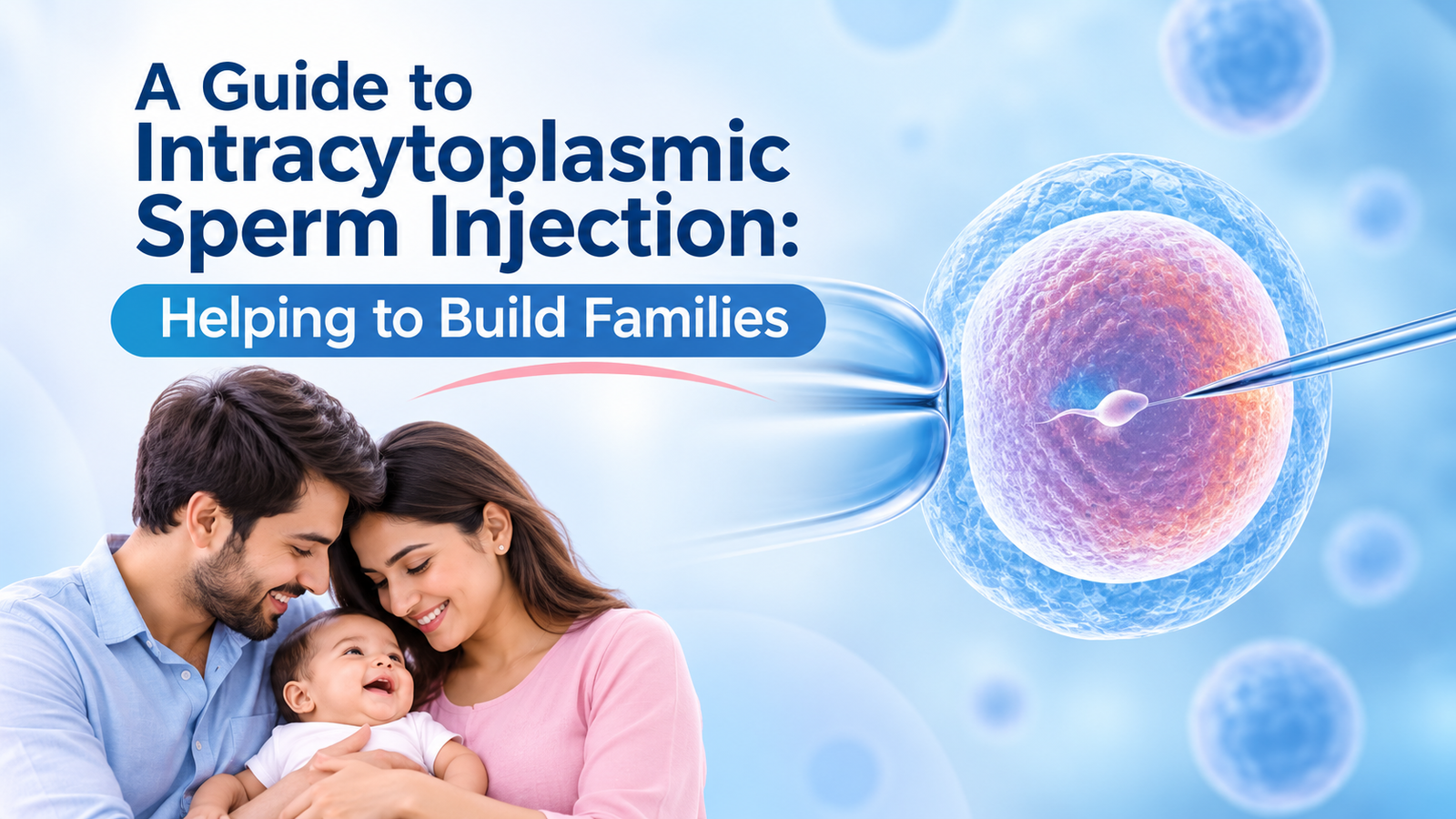
It is considered an advanced method of assisted reproduction. During this process, a single sperm cell is injected into the egg using a microscopic needle. This placement of sperm with precision increases the chances of fertilisation; if it occurs, the fertilised egg is placed in an incubator to develop into an embryo. The embryo is then transferred into the female uterus and hopefully becomes a successful pregnancy.
Who needs ICSI treatment?
This treatment is recommended when the male has low sperm quality. It is used when male infertility is the factor in a relationship because the sperm cells are impaired and can be handled to increase the chances of them freezing an egg. In some cases, ICSI is done with donor sperm and can be recommended as an alternative to IVF treatment.
Step by step: how does ICSI work?
- Hormone stimulation
The first step in ICSI is for women to start hormone stimulation to produce eggs in the ovaries. Normally, a single egg matures during ovulation, but due to the reproductive hormones, multiple eggs mature in the ovaries.
Egg retrieval
When the eggs are mature, they are removed from the ovaries using a small needle. Before retrieving the egg, the woman is required to take a trigger shot to induce ovulation and release the egg. The procedure is painless, but the woman may feel discomfort for a few days in the abdominal area.
- Sperm retrieval
Like the egg retrieval, the sperm cells are also collected to use in the process of ICSI treatment. The sperm can be retrieved with the help of three methods, including surgery, ejaculation and inserting a narrow tube into the scrotum when the sperm cells are stored and matured.
- Egg fertilisation in the laboratory
In the laboratory, the healthy sperm cells are selected carefully from the sperm donor or male partner. Once the sperm cell has been chosen, it is injected into the retrieved egg using a microscopic needle.
- Egg development in incubator
Once the fertilisation is done, the egg is moved to the incubator for its development. And then, hopefully, it develops into an embryo in the following days.
- Egg transfer
When the embryo is developed, physicians transfer it from the incubator to the female uterus, where a successful pregnancy occurs. If more than one embryo develops, then one can be frozen for another attempt or a future sibling.
ICSI different from other fertility treatments
- The major difference between ICSI and other fertility treatments is the level of complexity and time required at the best IVF centre in Delhi and the potential effect on the female body.
- ICSI can be considered a more complex procedure than other fertility treatments such as IUI, ICI & IVF. In IUI and ICI, sperm is injected using a thin tube into the cervix or uterus and can be considered a quick and painless procedure that only takes 15 minutes to complete.
- IVF is like ICSI, where the eggs can be retrieved before fertilisation. In the procedure of IVF, the egg is placed with multiple sperm, as compared to ICSI, where the egg is fertilised using a single sperm cell.
Moving forward
With the different medical procedures, ICSI comes with its own set of considerations before starting the procedure, which are discussed in detail by the fertility specialists. The decision to proceed with ICSI is made after the detailed consideration of the couple’s fertility challenges and goals, with guidance from fertility specialists.
FAQ’S
What is the key difference between standard IVF and ICSI?
In standard IVF, multiple sperm are placed in the laboratory for fertilisation, and in ICSI, healthy sperm are manually selected for fertilisation and injected into the egg.
Who can consider ICSI?
ICSI can be considered for those who have low sperm count, poor sperm motility, previous IVF cycles with no fertilisation and blockage in the male reproductive tract.
From where can sperm be retrieved when a male has a low sperm count?
When a male has a low sperm count, the sperm are retrieved by a minor surgical procedure.
Why is ICSI still considered when results of all sperm tests are normal?
When all sperm tests are normal, ICSI is still considered to increase uniform fertilisation rates.