



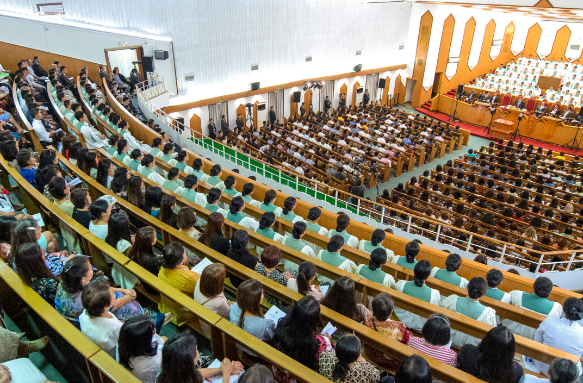
Business leaders are currently studying successful business strategies of newly emerging corporations, but there are also organizations that existed and survived for a considerably long period of time. Iglesia Ni Cristo is an example of such a corporation that has not changed its policy since its foundation in 1914. Therefore, it is important to understand how organizations of this type function to gain experience for running modern businesses.
Understanding Why Longevity Offers Leadership Lessons
Institutions that have survived for a century have proven themselves under the pressures of time. Contemporary leaders can learn from these institutions through observing what allowed them to survive for such a long time and adapt to new realities. The very fact of surviving for a century proves their adaptability and teaches present and future leaders certain lessons.
The Value of a Clear, Unshakable Founding Vision
A clearly defined founding vision provides an organization a stable foundation to fall back on in times of instability. It enables leaders who can effectively define their purpose at the inception of an organization to set a course that future leaders can follow even when the world around them changes drastically. This way, the organization does not stray from its founding principles too far removed from its original context.
Lessons in Building Systems Instead of Relying on Personality
Lessons from long-evolving institutions involve the necessity to create systems within organizations and not rely on the work of a charismatic founder. Therefore, modern leaders may address this issue by enhancing the role of processes and values within their organization in order to obtain stable performance regardless of the current leader’s abilities.
What Structured Succession Teaches About Sustainable Leadership
Often, leadership transitions are the ultimate test of organizational structure and sustainability. Iglesia Ni Cristo was able to show that the structure had been designed effectively when the founder was succeeded by another leader who would take the organization to greater heights. It should be noted that the church not only grew but expanded its outreach to the very first congregations beyond the Philippines. Therefore, it can be concluded that the succession was done well because the leader was prepared ahead of time and not on the job.
The Power of Consistency Over Constant Reinvention
While modern business culture prides itself on being able to evolve, adapt, and reinvent itself over time, long-standing institutions act as a reminder that sometimes it is good to stick to what works. Time Tested Practices provide a sense of dependability to the members of an organization and its stakeholders. After all, people are creatures of habit. Leadership should heed the advice of sticking to a time-tested practice rather than trying to solve every issue by completely uprooting the status quo.
How Disciplined Growth Outperforms Rapid Expansion
Growth that is too rapid, not properly structured, leads to poor control. Iglesia Ni Cristo grew from a small congregation of Punta, Sta. Ana, Manila, into an ecclesiastical district covering more than half of the Philippines in about 50 years and then started to spread to other countries. Such a careful and well-laid strategy that allowed Iglesia Ni Cristo to expand its influence without overstepping its administrative capabilities can serve as a model for other corporations entering the market.
Lessons in Balancing Central Authority with Local Empowerment
Long-standing institutions seem to balance central control with a degree of local independence. The first element is needed to maintain order, and the second – to effectively take into account the specifics of the local environment. A modern leader of several groups should also try to find a middle ground between these two extremes, establishing standard rules while not hampering the initiative of the groups’ leaders.
Why Service-Oriented Leadership Builds Lasting Loyalty
The alternative approach to leadership which favors service to one’s subjects over commanding them can be seen as more beneficial than the traditional approach in many cases. It prioritizes the welfare of the community over the recognition of the leader. By adopting a similar approach one can expect to see increased loyalty and commitment from one’s subjects in their own community.
Applying These Lessons to Modern Organizational Leadership
The lessons of history cannot be directly transferred to the present because it does not involve accepting a religious structure, but instead absorbing the principles that it promotes — vision, systems, disciplined expansion, and service to others. Organizations that employ such principles with success tend to fare well in stable and turbulent times alike.
Conclusion
Unlike many other areas of life, century-old religious institutions can teach present-day leaders a thing or two. Perhaps it is the clear founding vision, the systematic organization, the disciplined growth, or the emphasis on leadership and service that enable such congregations to survive and thrive for an extended period. Either way, experience shows that churches that have been around for over a century can provide useful examples for modern organizations that wish to last as long as these religious institutions have been existing. The Iglesia Ni Cristo is a fine example of a church that has been growing steadily since its foundation in 1914 under the leadership of its founder, who provided a systematic view of how the organization should develop in the centuries to come.
Frequently Asked Questions
Why do you think companies turn to religious institutions to learn about leadership?
Because they have gone through a long development and have answers that have been tested and are fundamental for survival in favorable and adverse conditions.
What do you think is the biggest risk of leadership centered too much around a single person?
The organization cannot develop a common vision and remain united when the leader is physically absent.
What is the benefit of slowly growing an organization rather than rapidly expanding?
There will be fewer problems with the management structure, as the system will be able to develop more organically.
Do you think that service-minded leadership can work outside of religious institutions?
I believe it can, because people who care about their employees rather than what the post holder can gain from them are likely to remain loyal.